
Implemented AI-native processes & workflows
WaterDoctor: AI-native workflows across a specialist business
AI-native implementation across WaterDoctor's business: connecting specialist knowledge, operational information and recurring work through software, Agentic Crews and human decisions.
WaterDoctor / Knowledge into operational work
Four kinds of work. Clear responsibilities.
Operating information and specialist knowledge support distinct research, reporting, BD and editorial workflows.
- 01
Business information
Start with context
Operational readings, domain sources and the brief for each task.
- Sensor trends
- Research + briefs
- 02
Specialist work
Give each task a workflow
Research, reporting, BD discovery and editorial production have separate roles.
- Four workstreams
- Defined handoffs
- 03
Human decision
Review the right work
Reviewers, the BD owner and the editor decide what proceeds in their workflow.
- Evidence
- Approval or revision
- 04
Practical output
Put the output to use
Reviewed reports, qualified research and editorial material for the team.
- Bilingual reports
- Opportunities + articles
Four workstreams within one ongoing WaterDoctor engagement. Each retains its own human decision point.
AI-native working across the business
WaterDoctor works in biological water treatment and aquaculture, where useful decisions depend on scientific knowledge, operating conditions and information that changes over time. Software must connect those realities. A fluent answer alone cannot tell a team whether a reading needs attention, whether a report is ready or whether an opportunity deserves further work.
wGrow has implemented AI-native processes and workflows across WaterDoctor’s business. The work connects operational engineering, domain research, pond reporting, business-development research and editorial production. AI is part of how recurring work is prepared, checked and delivered, with people responsible for the decisions that require their expertise.
This is an ongoing strategic technology partnership. The workflows described here belong to one company engagement, supported by embedded engineering and continuing operation.
Engineer alongside the domain experts
WaterDoctor’s specialists own the biological domain. wGrow builds and operates the software and agent stack around it. Close collaboration brings those responsibilities together: an engineer needs to understand how information arrives, what an operating decision means and where specialist judgment must remain in control.
The operational stack separates telemetry and laboratory inputs, bounded decision logic, reporting and evaluation. Engineer-defined limits constrain the system’s authority. The objective is useful software within an understood operating boundary, with information available to investigate what happened.
This operational layer is distinct from the research, business-development and editorial workflows. Each addresses a different job; treating them as one all-purpose agent would obscure their responsibilities. Explore the engineering partnership.
Connect monitoring to the work around it
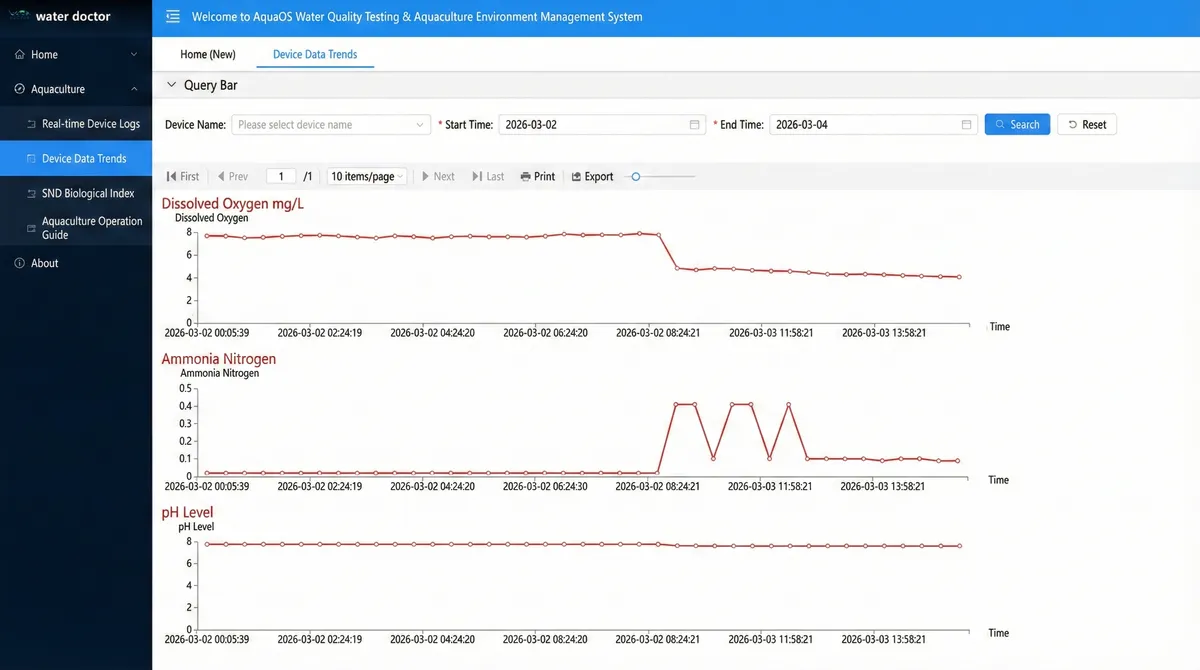
WaterDoctor’s deployed AquaOS platform provides the monitoring context: water-quality readings, historical trends, alerts and reporting. Connecting that information to an operating workflow gives a reviewer a place to examine what changed and what needs attention.
The monitoring layer is part of a wider software environment. WaterDoctor’s product pages explain the roles of the systems around it:
- AquaOS: sensor information, monitoring and operational outputs. Explore AquaOS.
- AquaMind: a published expert-system architecture connecting operational context with specialist reasoning, evidence checks and escalation. Its router, supervisors and shared workspace describe how different responsibilities can be coordinated. The architecture distinguishes launch scope from a larger flagship vision. Explore AquaMind.
- AI Digital Expert: a multilingual consultation surface for aquaculture questions, guidance and operating procedures. Explore AI Digital Expert.
- AquaChain: a traceability layer described through batch records, cryptographic fingerprints, public-chain anchoring and verification. Record integrity is a separate responsibility from interpreting the original readings. Explore AquaChain.
For the engineering team, these layers give each workflow a destination and a context. Research can inform an assessment; an assessment can become a reviewed report; the underlying readings remain available for inspection.
Make domain research a recurring workflow
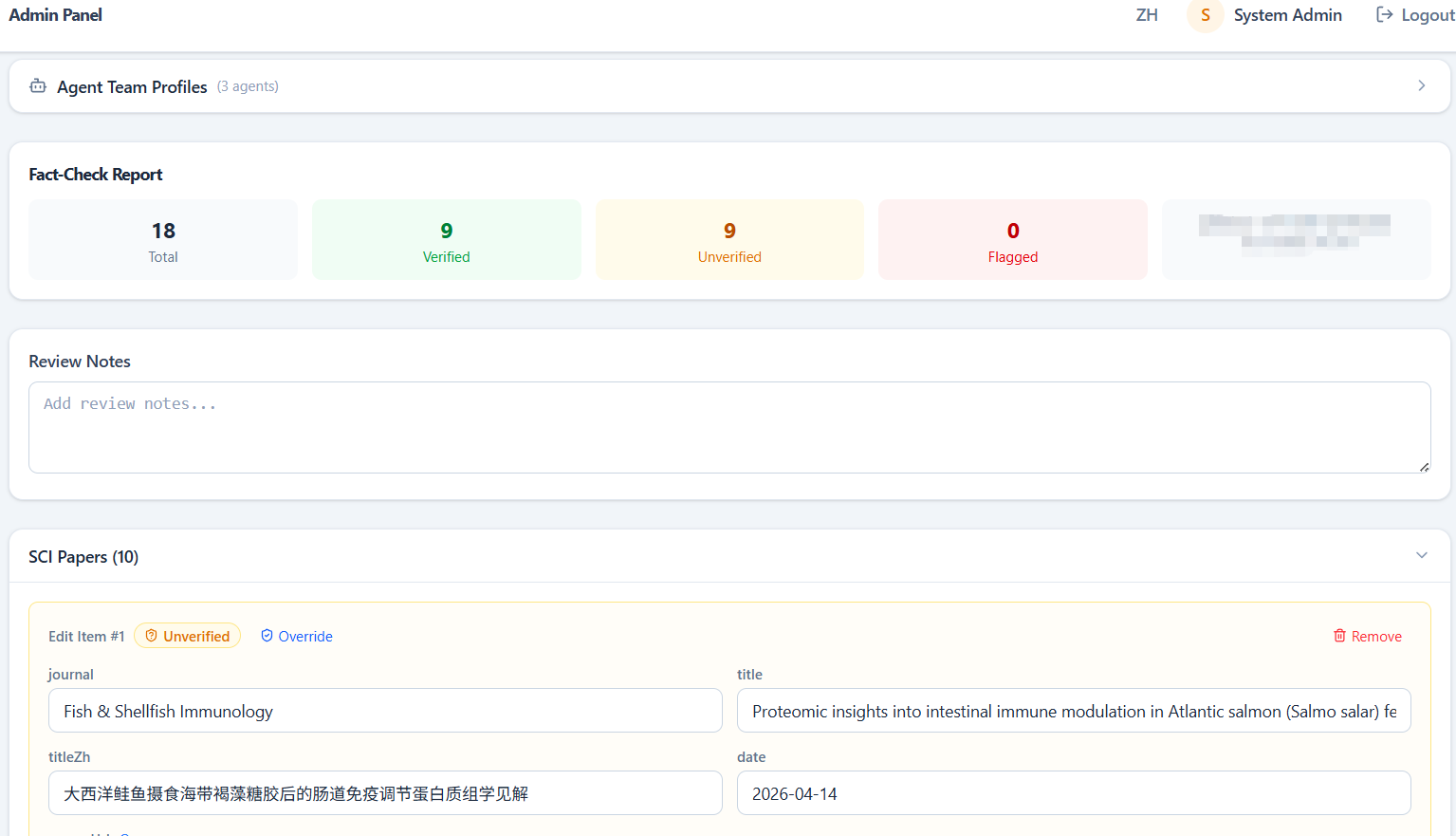
WaterDoctor’s research desk gathers aquaculture literature, market information and policy developments into a bilingual brief. Research, fact-checking and editing have separate roles. The review interface exposes verification states and provides controls for a person to record an override or note.
That separation makes uncertainty visible. Finding a source and deciding it is suitable for use are different steps. Unresolved questions remain available to the reviewer rather than disappearing into a polished summary.
The reviewed research bundle becomes an input for subsequent work. Domain knowledge moves through a defined process, with evidence and review decisions attached. This is a repeatable operating workflow, rather than staff starting a fresh prompt every time they need an update. See the research workflow.
Turn operational readings into reviewed reports
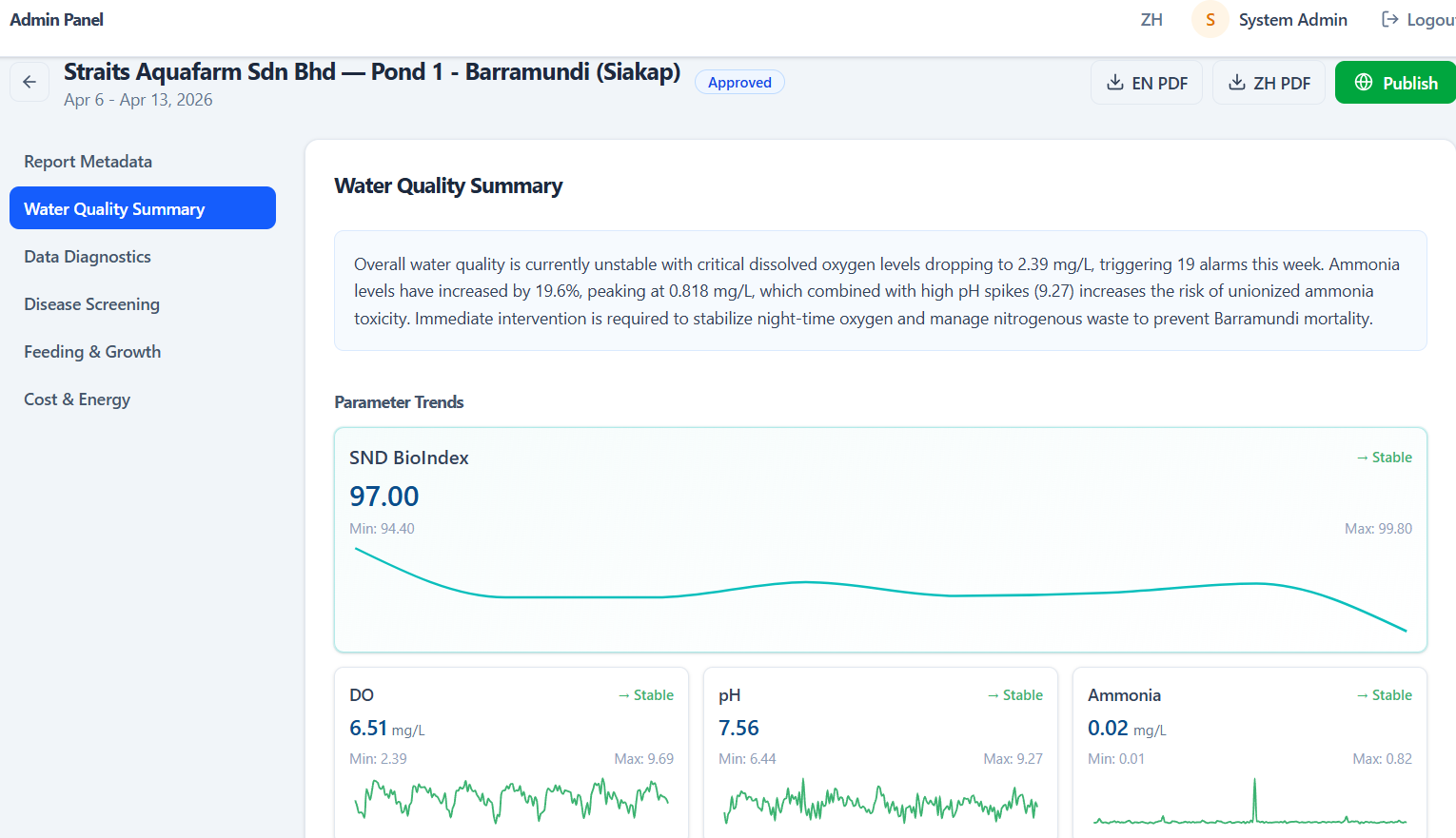
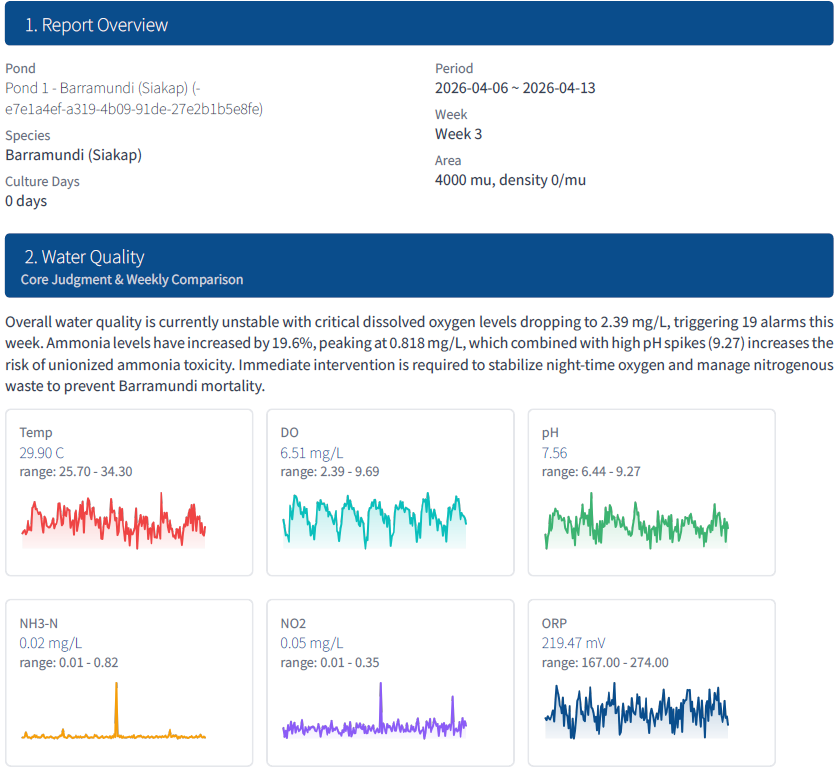
The pond-reporting workflow brings sensor readings together with the research bundle and relevant weather information. Its output includes water-quality charts and structured assessment sections, with English and Chinese report actions in the workspace.
The workflow prepares a report for review before publication. A responsible person can inspect the information and the proposed assessment before the report leaves the system. Approval status sits beside the output, making the decision part of the working software.
This creates a practical connection between gathering information and delivering something an operating team can use. The charts and readings describe the reporting period in the displayed example. Explore the reporting interfaces.
Give business development a reviewable pipeline
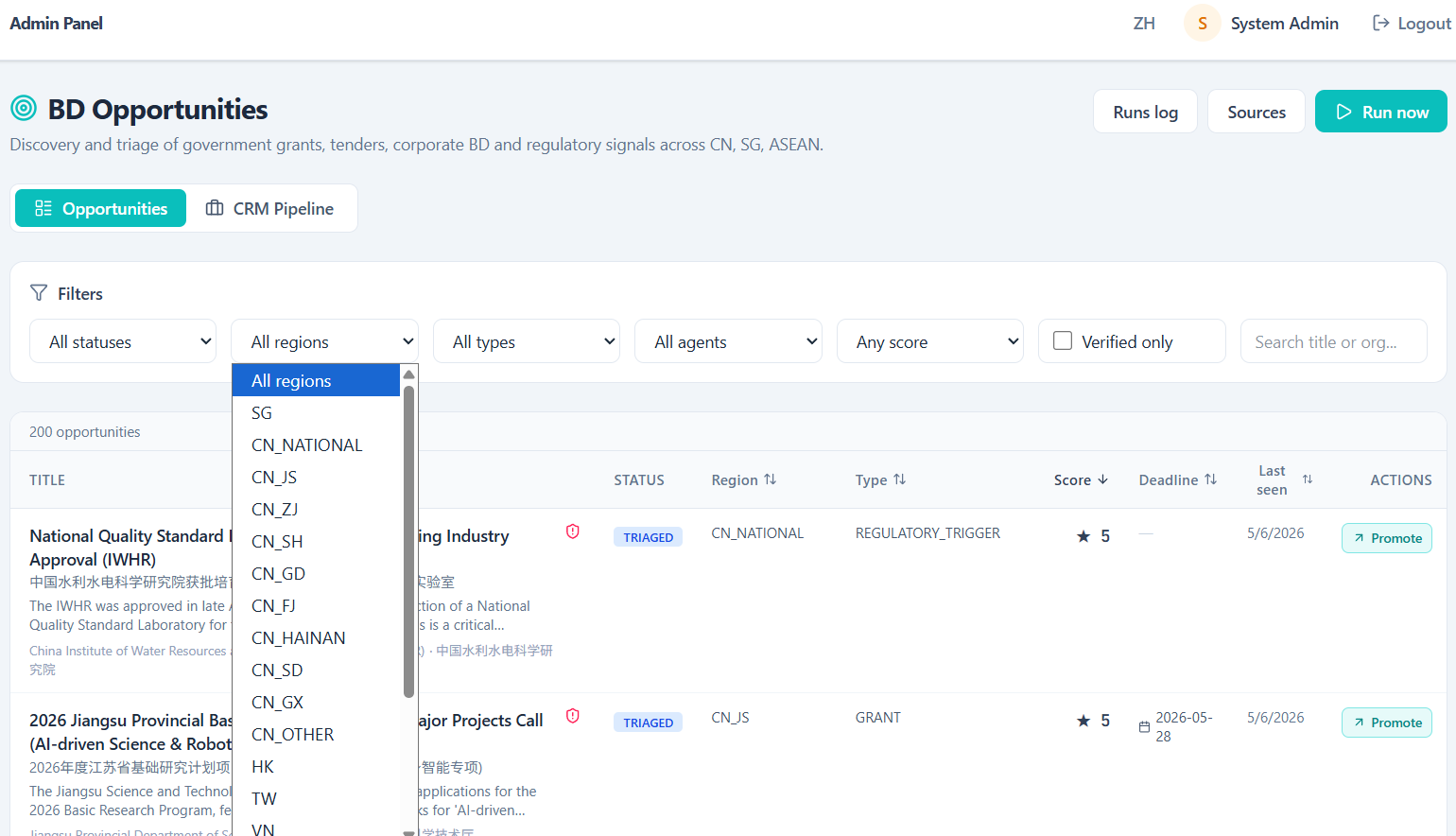
WaterDoctor uses BD Crew for recurring opportunity research. Specialist scouts cover grants, tenders, corporate intelligence, regulatory signals, events and academic collaborations. Editing and verification turn the findings into a bilingual opportunity queue with sources and qualification information.
The source registry helps govern where research begins. The board lets the team inspect findings by their characteristics and review state. An opportunity’s detail view keeps supporting information close to the proposed action.
A human BD owner decides what advances to pursuit and CRM follow-up. Research becomes a reviewable input to that decision, with sources and qualification information available beside the finding. Look inside BD Crew.
Carry specialist knowledge into editorial production
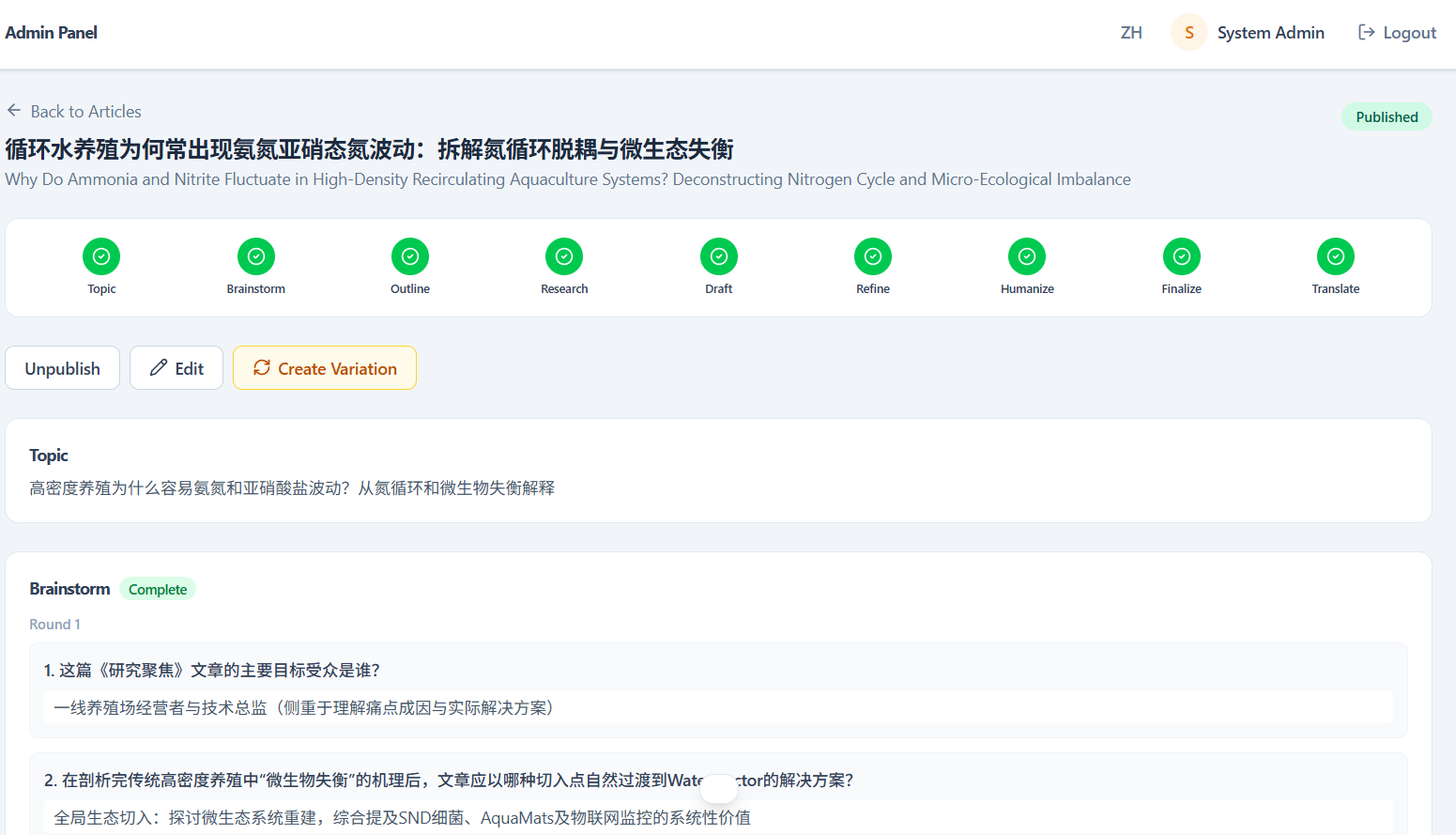
Article Crew operates in WaterDoctor’s editorial backend. Topic selection, research, drafting, refinement and bilingual production form a staged workflow. Source handling and reference checks are part of the process, while a human editor retains publication authority.
The interface records workflow stages and editorial decisions. The team can inspect what was requested, how it developed and where further review is needed. Research and writing become coordinated work rather than separate outputs passed between disconnected tools. Explore Article Crew.
Build a capability the business can keep using
Across these functions, the implementation connects information, specialist roles, review interfaces and the destination of the work. Each workflow has a practical purpose and a human decision boundary. wGrow’s engineering responsibilities continue as the systems operate and the work develops.
That is the significance of AI Forward Deployed Engineering for WaterDoctor: company knowledge becomes part of working software, and software becomes part of recurring business activity. The partnership illustrates AI-native implementation across a specialist business while retaining the expertise of the people responsible for it.
wGrow · Since 2008. Explore our AI Forward Deployed Engineering approach or discuss the work inside your business.