
Implemented AI-native processes & workflows
Hanafashion Indonesia: AI-native work in a three-brand fashion business
PT Hanafashion Indonesia has implemented AI-native processes and workflows in a real fashion operating business. Its three brands connect distinct customer needs with marketplace shops, product content and presenter-led selling.
Hanafashion Indonesia / Three brands, clear context
Keep the brand inside the brief.
A shared operating business brings different products and audiences into customer-facing work.
- 01
Business information
Start with the brand
Identify the audience, garment, product facts and visual references.
- Hanafashion
- Bigins.ID
- Eraya
- 02
AI-supported preparation
Make the materials
Research and creative tools support a specific product and marketplace brief.
- Product context
- Shared ArightAI tools
- 03
Human decision
Check what customers see
Review the product explanation and creative before selecting what to use.
- Product clarity
- Brand suitability
- 04
Practical destination
Bring the range to life
Prepare materials for the shops, product content and live presentation.
- Marketplace shops
- Content + live
One business. Three customer contexts. Each brief retains the identity of its brand.
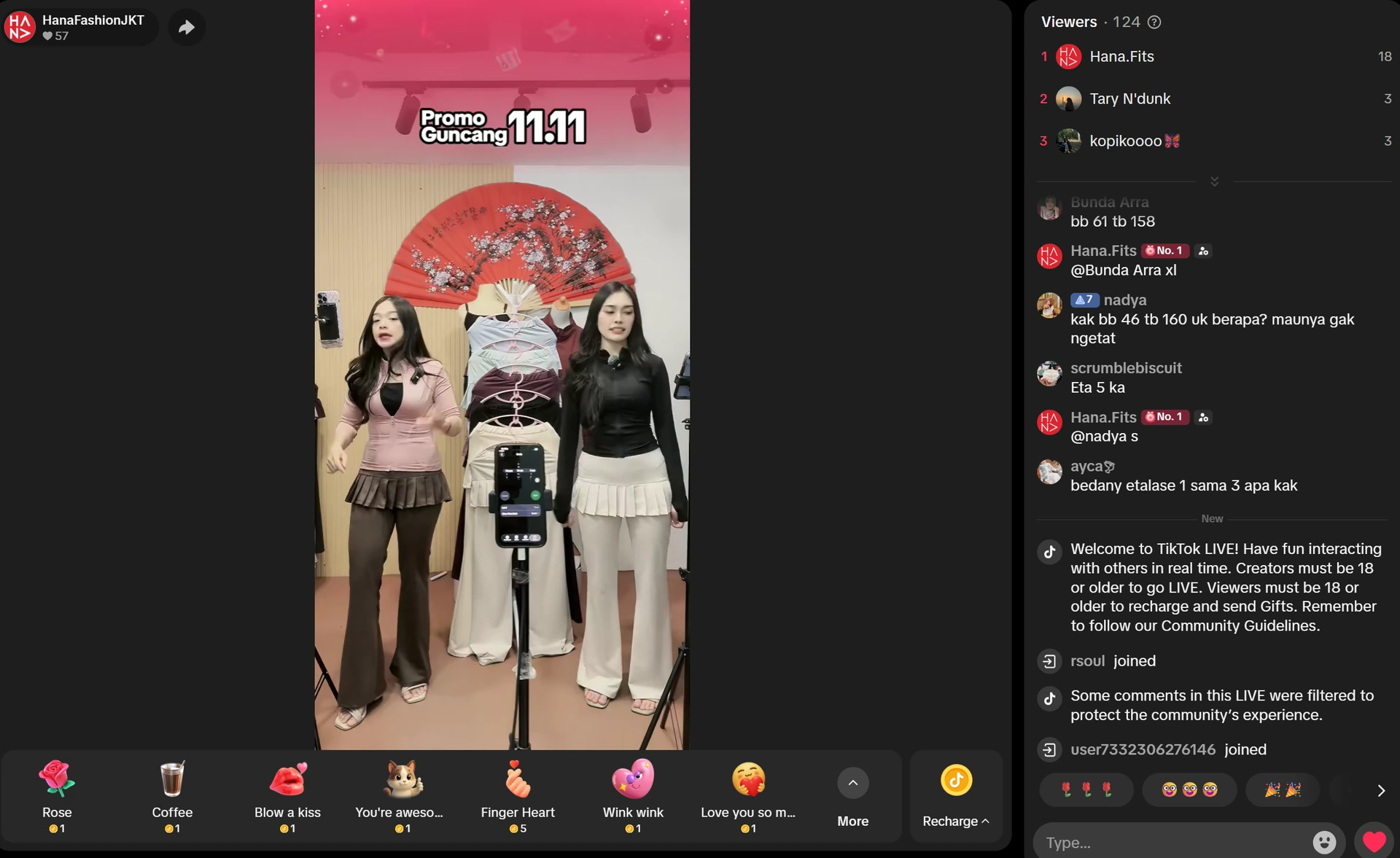
Three brands, three customer contexts
PT Hanafashion Indonesia operates Hanafashion, Bigins.ID and Eraya. Each serves a different fashion audience, with its own identity, shop presentation, social profile and product content. The business has implemented AI-native processes and workflows within this multibrand operation.
The operating context matters. Fashion customers need to recognize a style, understand an individual garment and distinguish what is being sold from the wider outfit shown. Work across shops, videos and live sessions must keep that product meaning clear while respecting each brand’s positioning.
The published Aright operating case documents this three-brand business through real storefronts, social content and livestream captures. It provides a concrete view of the commercial work surrounding the AI-native implementation.
A shared business with distinct identities
Hanafashion focuses on original Korean-style fashion, including tops, skirts, dresses and outfit combinations. Its worn looks and short videos develop a recognizable styling direction; its shop identifies the individual pieces available.
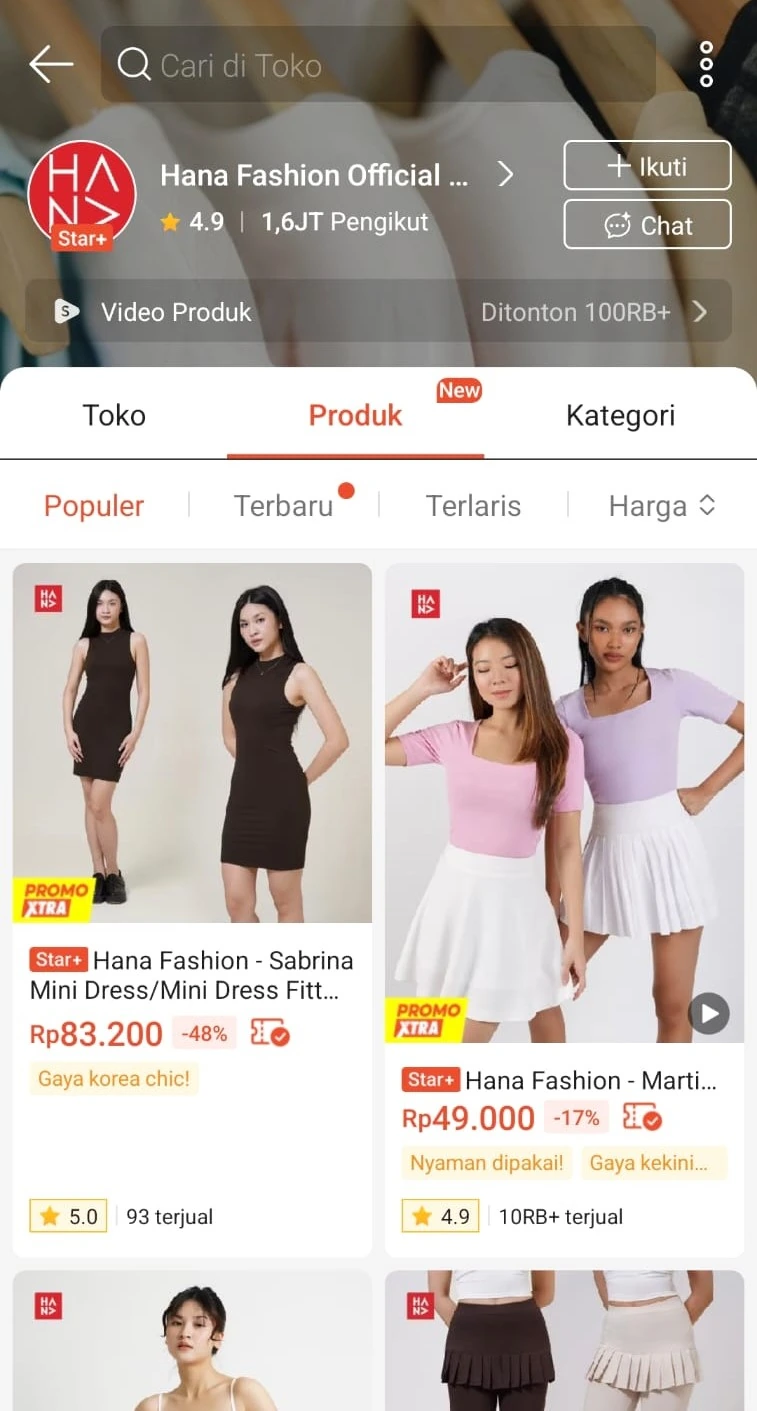
Bigins.ID serves plus-size women’s fashion. Product images, social videos and live presentation show garments worn, giving customers visual references for silhouette and styling.
Eraya serves fashion for Muslim women, with coordinated pieces, longer dresses and styling contexts. Product explanation needs to distinguish the offered garment from accessories or layers used to complete a look.
These differences belong in the operating work. A shared approach can help coordinate brands, but a useful brief still needs to identify the intended customer, product and explanation. The same visual or description cannot simply be assumed suitable for all three.
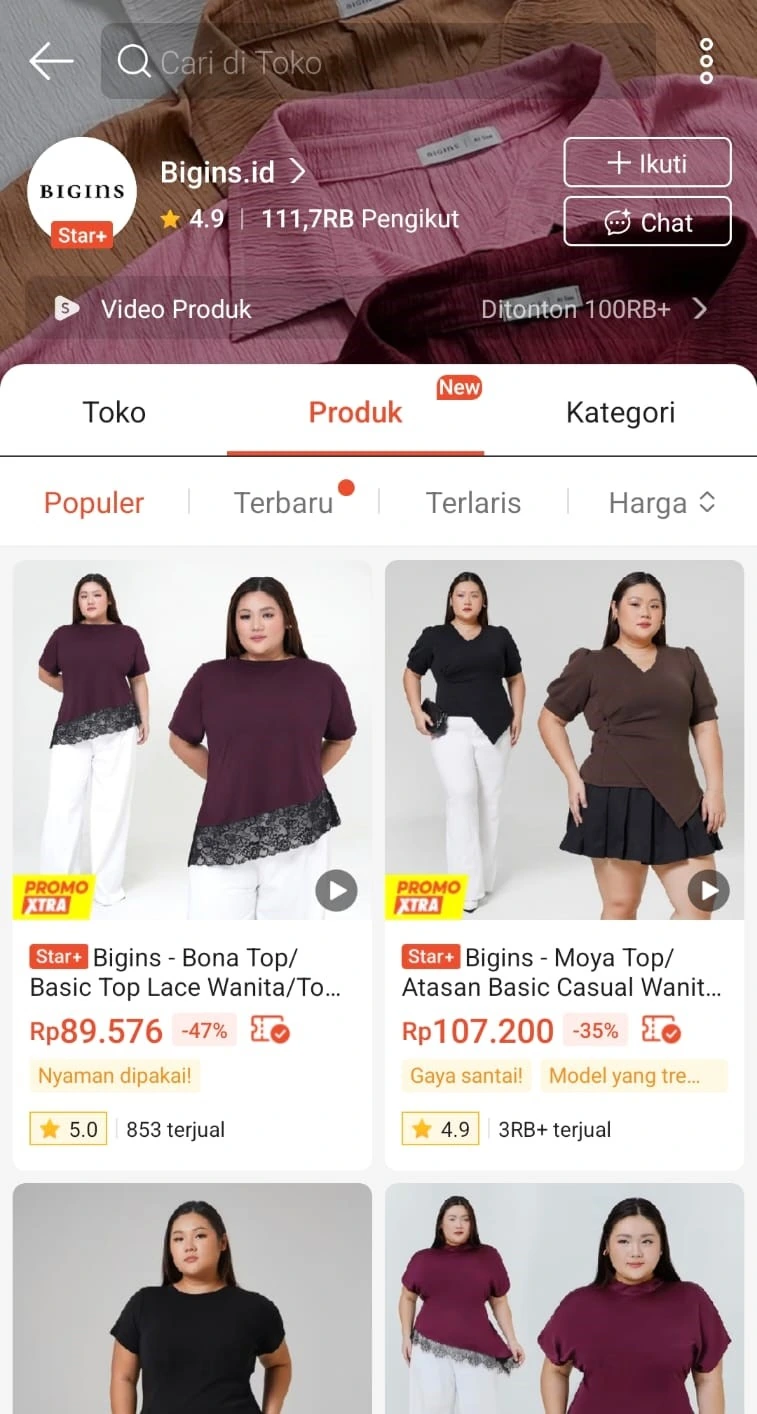
Connecting the shop, content and live presentation
The documented scope includes Shopee and TikTok shop presentation, social accounts, worn-look photography, short-form product videos and TikTok livestream demonstrations.
Each format carries different information. A short video introduces movement or a styled combination. A profile establishes brand context. A shop organizes products and choices. A live presenter can wear or hold a garment beside the displayed range, giving viewers another way to examine it.
Keeping those encounters connected is practical operating work: an item discovered through content should remain recognizable when the customer reaches the shop. The published case shows those channels and their brand-specific presentation through actual operating materials.
From research to an approved creative set
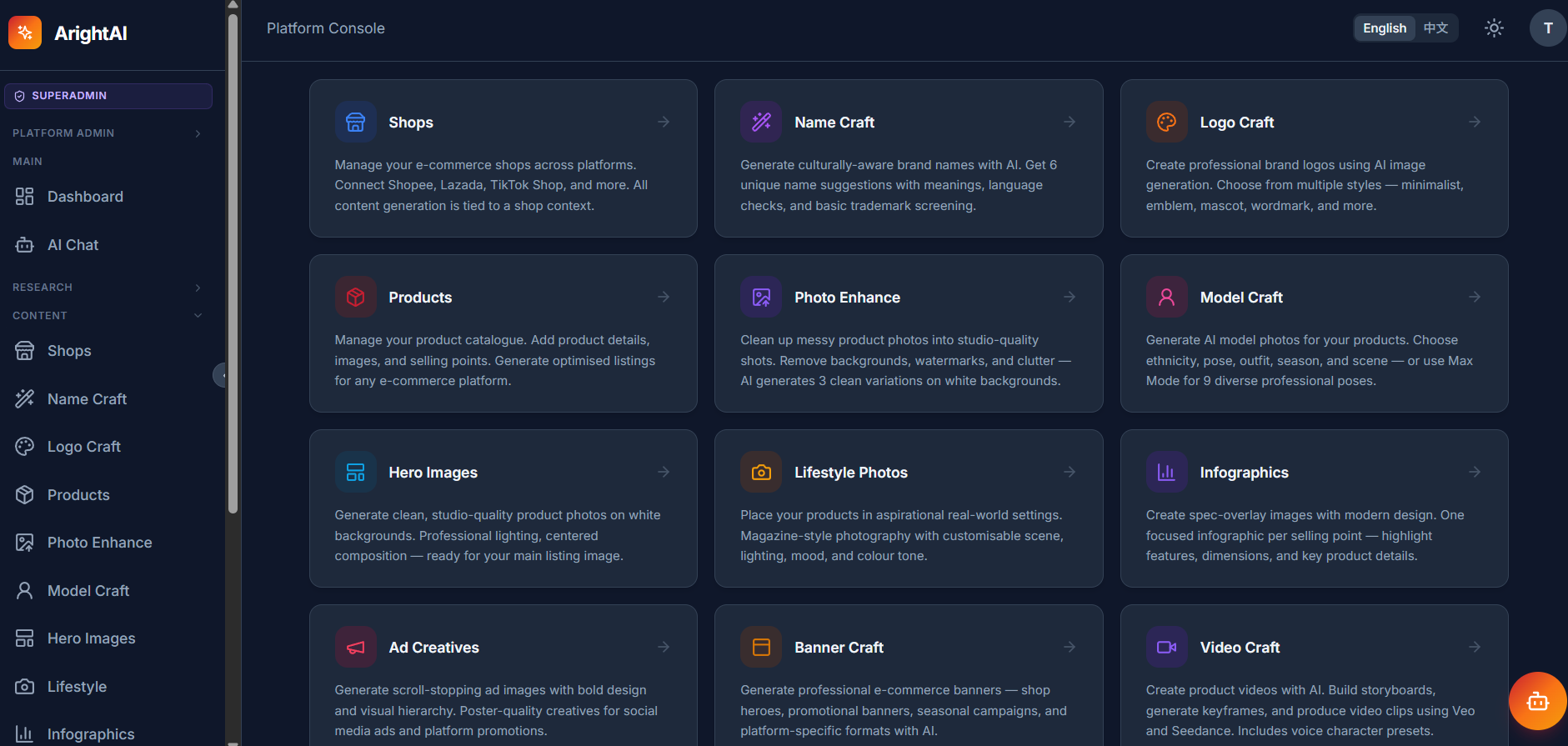
The shared ArightAI ecommerce workspace makes the AI workflow concrete. Its public product overview connects market research, listings, visuals and campaigns: research informs what to investigate, product inputs become content and creative, and campaign preparation packages those materials for customer-facing formats.
This gives a multibrand business a practical sequence to organize around:
- Research the market and product context. Product research, trends, keywords, competitors and sentiment provide inputs to examine alongside the business’s own product knowledge.
- Prepare a specific brief. Identify the shop, brand, product facts and visual references so the creative task has a clear subject and audience.
- Create materials for the intended destination. Prepare listing copy, listing packs, product images, banners, model photos or campaign posts according to the work required.
- Review the result before using it. Check the product explanation and creative together, then select what belongs in the customer-facing work.
These are the platform capabilities connected to the operating context. The shop and livestream images on this page show the real brands and their commerce activity; the platform image below shows the separate AI workspace.
The published Image Crew workflow explains how Agentic Crews support this preparation. Shop, product and visual-reference analysts supply context; a creative director brings that work into a strategy, and a prompt engineer prepares the generation instructions. A render agent produces alternatives, a grader checks them, and a human art director approves the anchor and outputs or returns them for revision.
That division of work matters for Hanafashion’s three-brand context. Shared production tools can support repeatable work while each brief retains its own product and brand references. The human review point gives the team a place to judge whether a creative is suitable for the brand and item being presented.
ArightAI prepares content for marketplace destinations including Shopee and TikTok Shop. Preparing an asset and publishing it are separate actions; the platform’s public overview distinguishes content targets from live direct-publishing integrations. Individual shop and live captures are presented as operating evidence, without assigning a generation history to each image.
Why this matters for AI Forward Deployed Engineering
AI engineering in an operating business needs the context of the work it supports. Here, that includes distinct brand audiences, product identities, customer-facing formats and the people presenting the clothes.
For a traditional company considering AI-native ways of working, this case offers a concrete starting perspective: identify the existing work and its dependencies before choosing what to build. In a multibrand operation, that means understanding which information is shared and which decisions require the specific brand’s context.
The company-level implementation places AI-native working inside an established operating business. Its brands, product ranges and channels give that work a specific purpose: support the way the company brings products to different customers while preserving the context each brand needs.
Relationship and further reading
This is a related operating-business case. Aright’s published account identifies Hanafashion Indonesia as its Indonesia fashion business, running the three brands.
Explore the full Hanafashion operating case, Aright’s wider work, the ArightAI workspace and Aright’s commerce and market operations service.