
Long pieces, short pieces, and an honest archive.
Featured essays are at the top. Below that, the steady stream of technical notes and project field notes — filterable by category. Most pieces are produced by our Article Crew and edited by a senior engineer. We publish what was hard, what was wrong, and what we changed.
The pieces we'd send a buyer first.

The 50-Year Compile: How 1970s Math Defeated GOFAI and Built Modern AI
Paul Werbos derived backpropagation in 1974 on a machine that could not run it. The fifty-year wait between the math arriving and the compute catching up is the story of how 1970s ideas, not 2010s ones, built modern AI.

The Million-Token Mirage: A Micro-Modular Framework for AI Coding
Massive AI context windows degrade reasoning and introduce silent code regressions when treated as infinite storage. Engineers must cap working context at 30 percent and enforce strict session hygiene using handover notes to maintain architectural continuity.

The Memory Bottleneck: Why Your Curator Agent Dictates AI Success
Massive context windows aren't working memory—they are unsearchable junk drawers that degrade agent reasoning. To prevent context collapse, multi-agent systems require a dedicated Curator agent to actively filter, deduplicate, and synthesize information.

Inside the Article Crew: nine stages, ten specialists, and a 95% claim-coverage gate.
The editorial pipeline we run inside WaterDoctor's backend. How one agent per stage, a verbatim-quote check, a Crossref DOI cross-check, and a live-URL fetch keep fabricated citations out of the prose.

Inside the WaterDoctor Crew: a research desk and a sensor-to-PDF agent on a weekly cadence.
Two pipelines, one weekly cadence, one human gate. How the WaterDoctor crew reads ten aquaculture journals, fact-checks every paper, then turns each pond's pH/DO/ammonia stream into a bilingual PDF the farm manager, the vet and the regulator can all read off.
Shorter, more often.
Technical write-ups, agent-team updates, and project field notes.
Private MCP Tunnels Need Asset Registers
RAG Pipelines Must Inherit Row-Level Security
On-Prem Agents Need Data-Gravity Runbooks

Cursor Blame Makes AI Authorship A Permanent Audit Surface

Tool Result Payloads Need Size Budgets

Singapore's MGF vs EU AI Act: The SME Compliance Gulf

Browser Agents Need Root-CA Test Fixtures
Running Agent Scratchpads in WebAssembly Isolates

Agent Canary Deployments Need Shadow Commits

Agent-to-Agent Handoffs Need Zod Contracts, Not Text

Programmatic Tool Calling Needs Intermediate Ledgers

ACP Turns IDE Choice Into An Integration Contract

Coding Agent Defaults Need Benchmark Ledgers

Agent Instruction Layers Need Precedence Matrices

Mid-Conversation System Messages Need Transcript Markers

Citation Agents Must Not Manufacture Evidence

Health Agents Need Source Recency Bands

Enterprise Deep Research Needs Citation Triage Screens

Cyber Transcript Sweeps Need Search-Method Receipts

Small-Business Agents Need Connector Degradation Modes

Data Agents Need Metric Definition Contracts

Mounted Inputs Need Data Classification Labels

Managed Agent Sandboxes Need Seed Data Contracts

Non-Developer Codex Needs Technical Sign-Off Queues

Tool-Written Programs Need Fixture Tests

Excel Copilot Python Needs Workbook Execution Manifests
Cyber Evals Need Real-Internet Circuit Breakers
Tool Guardrails Need Boundary Coverage Maps

Agents SDK Upgrades Need Replay Suites

Physical Device Agents Need Dead-Man Switches

Agent Browsers Can Drop Pixels, Not Form Semantics

Sensitive Prompts Belong Outside The Model Transcript

Plan-To-Permission Agents Need Scope Diff Screens

Agent Memory Needs Garbage Collection Jobs

Multilingual AI Safety Needs Fixture Languages

Agent Gateway Policies Need Simulation Runs

Security Autofix Agents Need Fix Lineage

Code Review Agents Read The Branch, Not The Base

Computer-Use Evals Need Dense Screens

Long-Running Agents Need Progress Receipts

Computer-Use Machines Need Custody Records

No-Code Agent Builders Need Promotion Gates

Agent-Owned Connections Need Builder Liability Labels

Agentic ERP Apps Need Transaction Boundaries

Windows Computer Use Needs App Allow Lists

Explicit Cache Breakpoints Turn Context Into An Interface

Self-Improving Agents Need Correction Taxonomies

Chat And Work Need Different Product Contracts

Model Marketplaces Need Lockfiles

The Reconciliation Screen Is Where Integrations Tell The Truth

Enterprise Agents Need Hidden-Workflow Maps

Gartner's Agent Autonomy Tiers Demand Network Boundaries

Reasoning Summaries Are Not Audit Evidence

Content Credentials Need Pipeline Tests
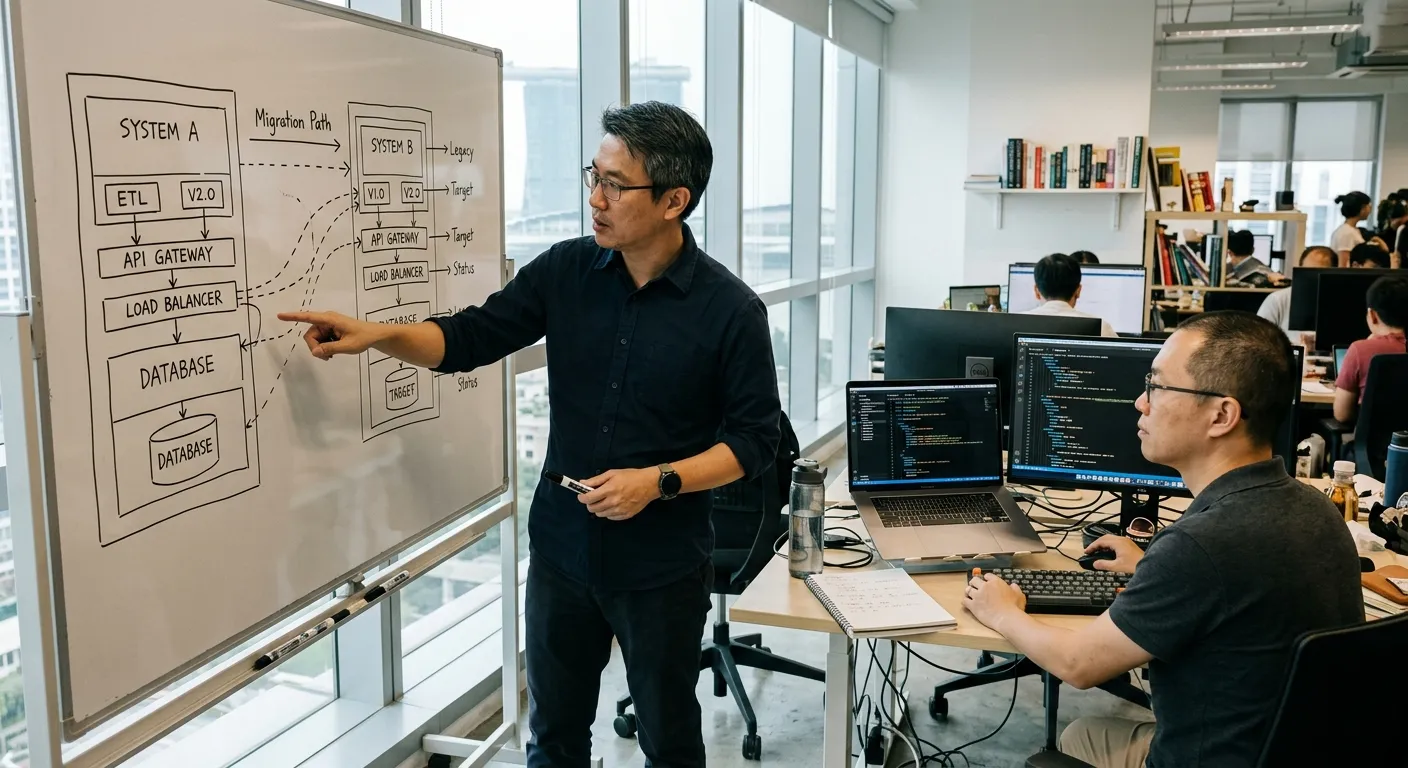
Upgrading An LLM Version Requires Data Migration Thinking

Agent Adoption Is Stuck At Verification
Agent Egress Firewalls: Blocking Code Helpers From The LAN

Token Budgets Are Department Budgets In Disguise

Agent Framework Choice Is Now A Delivery Risk

The 'Model Did It' Is Not An Incident Report

Agent-First APIs Should Return Recovery Paths

Computer-Use Agents Need Screen-Level Audit Logs

Agent Permission Classifiers Need Their Own Test Suite

Agent Runtimes Are Relearning Operating Systems

Spreadsheet Agents Need Cell-Level Evidence

Codex On Mobile: Approval Is Now A Runtime Surface

Dependabot Plus Agents: Patch Automation Needs A Blast Radius
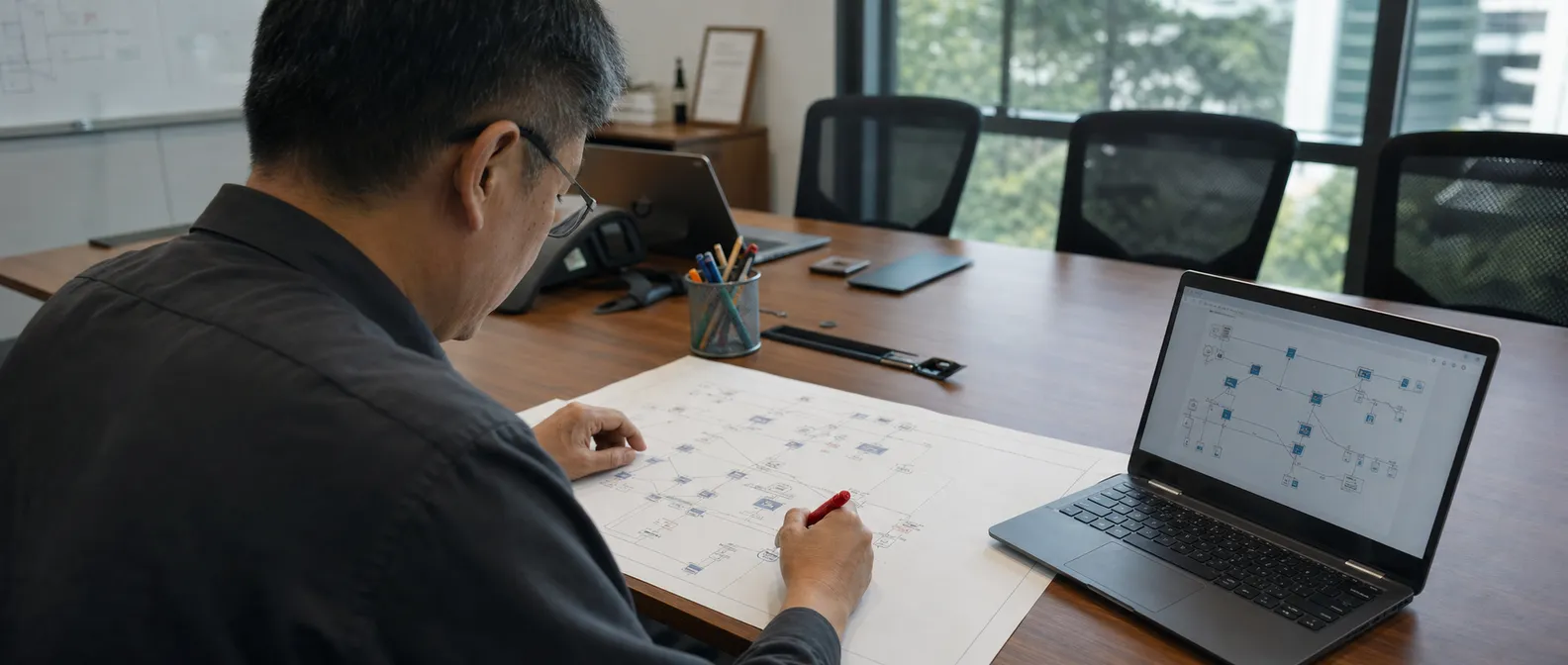
Agent Tool Catalogues Are Risk Inventories

Agents That Pay Need Payment Limits, Not Vibes

PDPC GenAI Guidelines Turn Training Data Into A Delivery Question

Codex On The Phone: Useful, Dangerous, Mostly Triage

Idempotency Keys: The Old Trick Every Agent Workflow Needs
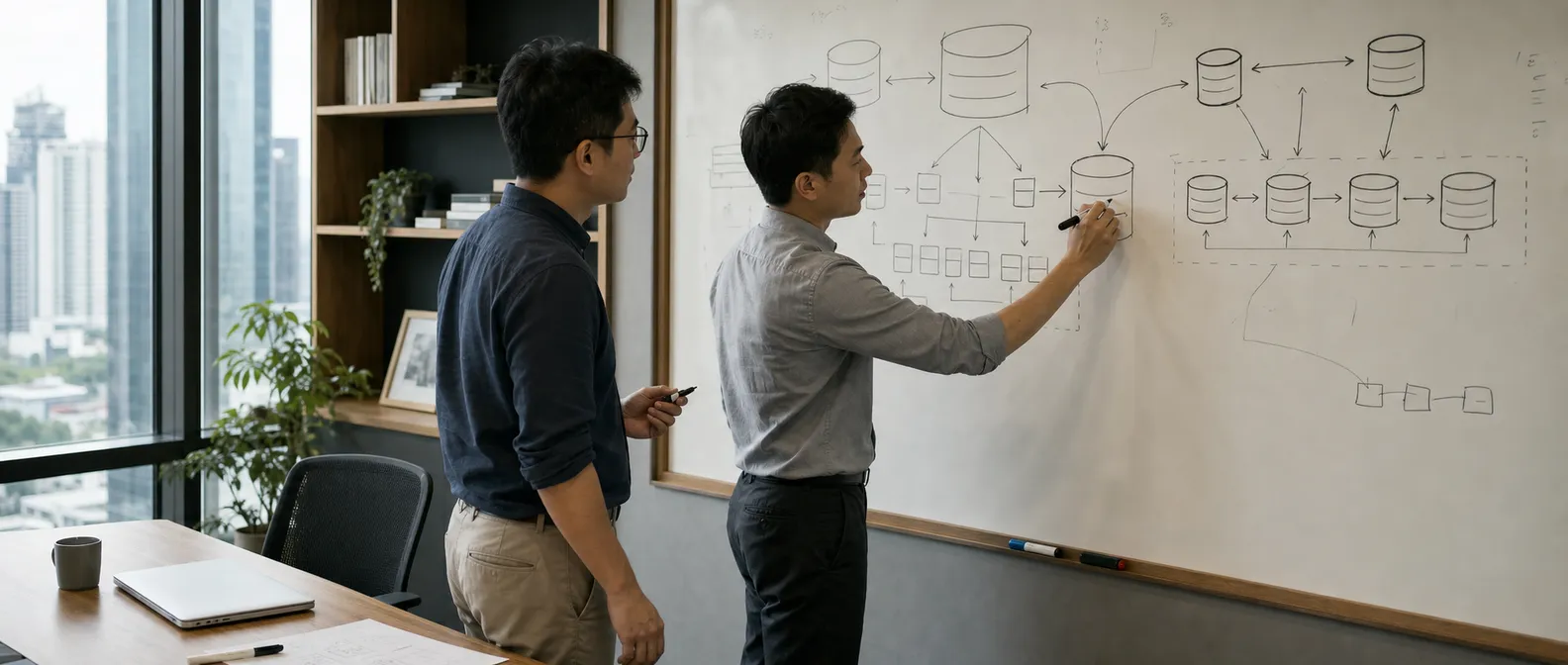
Postgres JSONB as the Scratchpad for Multi-Agent State

Prompt Injection Firewalls for HR Agents

Semantic Caching for Agent Crews: Cutting Token Bills by 40%

Agent-to-Agent Auth in 2026: Why OAuth Breaks Down for Crews
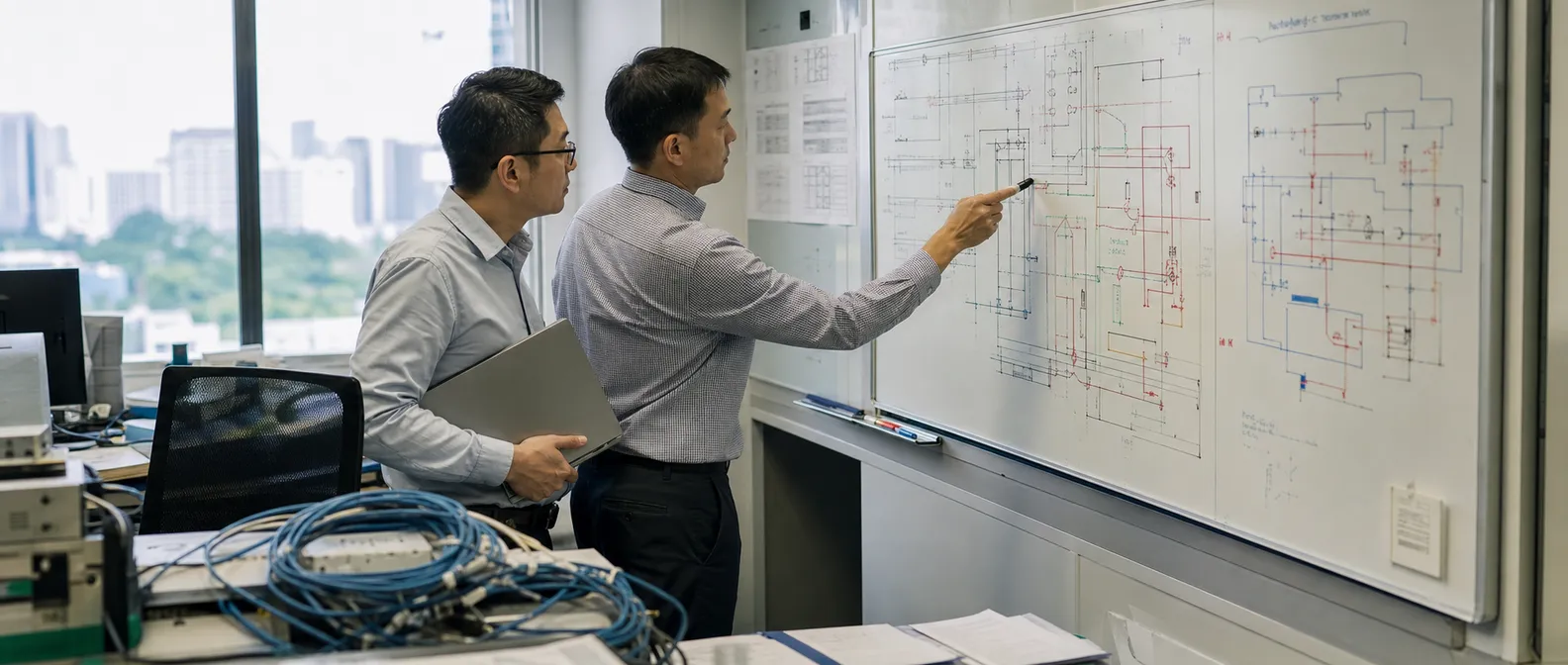
MCP RCE Claims: The Protocol Is Not Your Sandbox

Writing B2B SLAs When Core Services Rely on OpenAI Uptime

Escaping Context Collapse: An N-ary Tree Architecture for 100K-Word Generation
Large context windows fail at generating cohesive text past 20,000 words due to context collapse. To reliably generate 100,000 words, developers must replace linear RAG with a hierarchical N-ary tree architecture and a centralized global state.

Maintaining a Windows CE 6.0 Scanner Fleet in 2026

Why We Hardcode the DAG for B2B Approval Agents

Sandboxed Agents Are A Runtime Feature, Not A Policy

When AI Coding Agents Become Line Items, Not Toys

Vibe coding is the on-ramp. Agentic engineering is the runway.
Karpathy named the move from typing code to specifying intent. After twelve months in production with it, here's what stays, what breaks, and what the actual discipline looks like.

The Agent Harness Is Now Architecture

Reversibility Is The First Agent Requirement
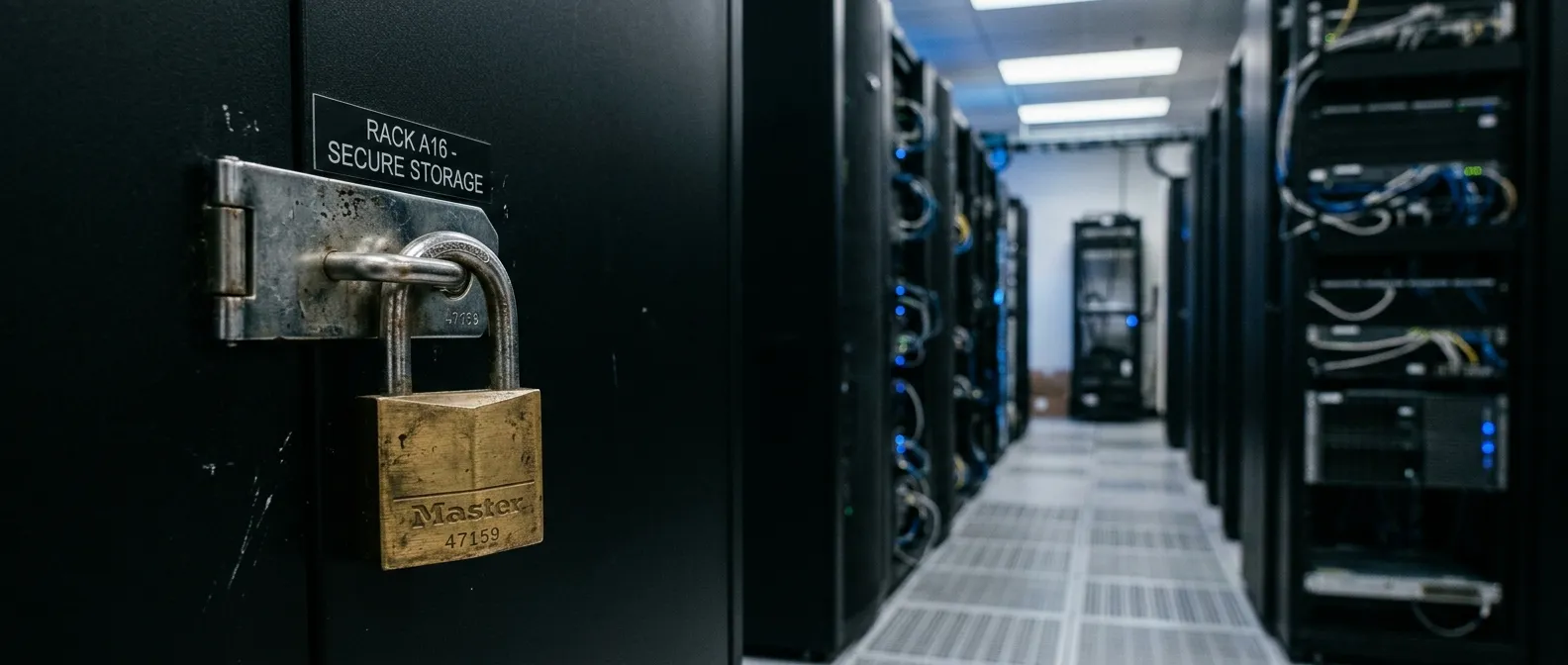
SQL Server hardening checklist.
Our working SQL Server hardening checklist — the controls that aged well kept, the ones that aged badly cut, and the ones that need new framing in light of MGF and modern Azure SQL.

Agent Skills Are Build Artifacts, Not Prompt Snippets

Inside the Selection Crew: six analysts brief the buy, the buyer signs the PO.
How the Selection Crew briefs an e-commerce buy across six lanes — market intelligence, trend forecast, competitor radar, keyword research, arbitrage scout, sentiment — in EN ⇌ 中文, async, with a downloadable .docx the buyer signs before procurement moves.
AWS Network Firewall in front of an app server: the setup we'd actually use.
Default posture for putting AWS Network Firewall at the VPC edge in front of a public-facing app server, plus the agent-era addition.

Cloud security architecture for a medical group.
A dual-cloud (AWS + Azure) security architecture for a Singapore medical group: VPN, segmentation, ELK / OpenSearch, and the controls now in scope under MGF and PDPC enforcement.

Redis Task Queues for Inter-Crew AI Handoffs

Hospital visitor logging under PDPA: hashing, partial IC, and what we'd do differently.
Designing visitor logging for a Singapore hospital under PDPA — SHA-256-hashed IC numbers plus last-4-digit verification — and what we'd build today, given Singpass, MGF, and PDPC's evolved enforcement.

Inside the Image Crew: eight e-commerce roles, one anchor, brand-locked across six channels.
How we wired the Image Crew on the ArightAI platform — five analyst agents brief the shoot, a render agent ships the frame, a grader catches drift, an art director signs off. The anchor-first pattern that keeps two thousand SKUs in lock with one brand reference set.

Scaling a patient-management system without buying a bigger server.
How we got a 500K-client patient system on AWS back into reasonable response times without upgrading the host — splitting tiers, distributing cold data, and the agent-loop reporting pipeline that replaced template code.
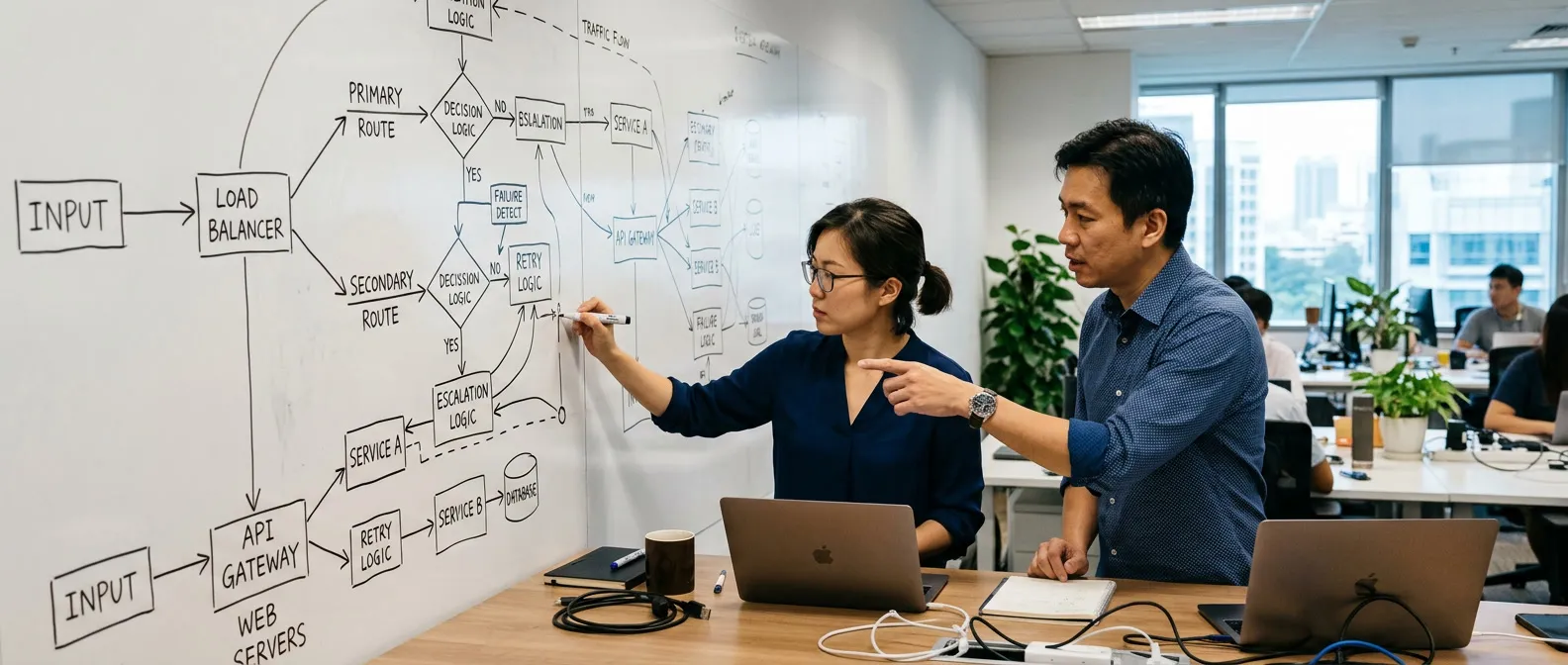
Routing Classifications to Llama 3 to Save Frontier Tokens

Inside the BD Crew: six narrow scouts, a verifier, and a human in the only seat that signs.
How we built the bilingual EN/中文 BD pipeline that ships into WaterDoctor's CRM every week — six lane-specialist scouts, a deduping editor, a corroborating verifier, and a registry that grows by proposal, not by crawl.
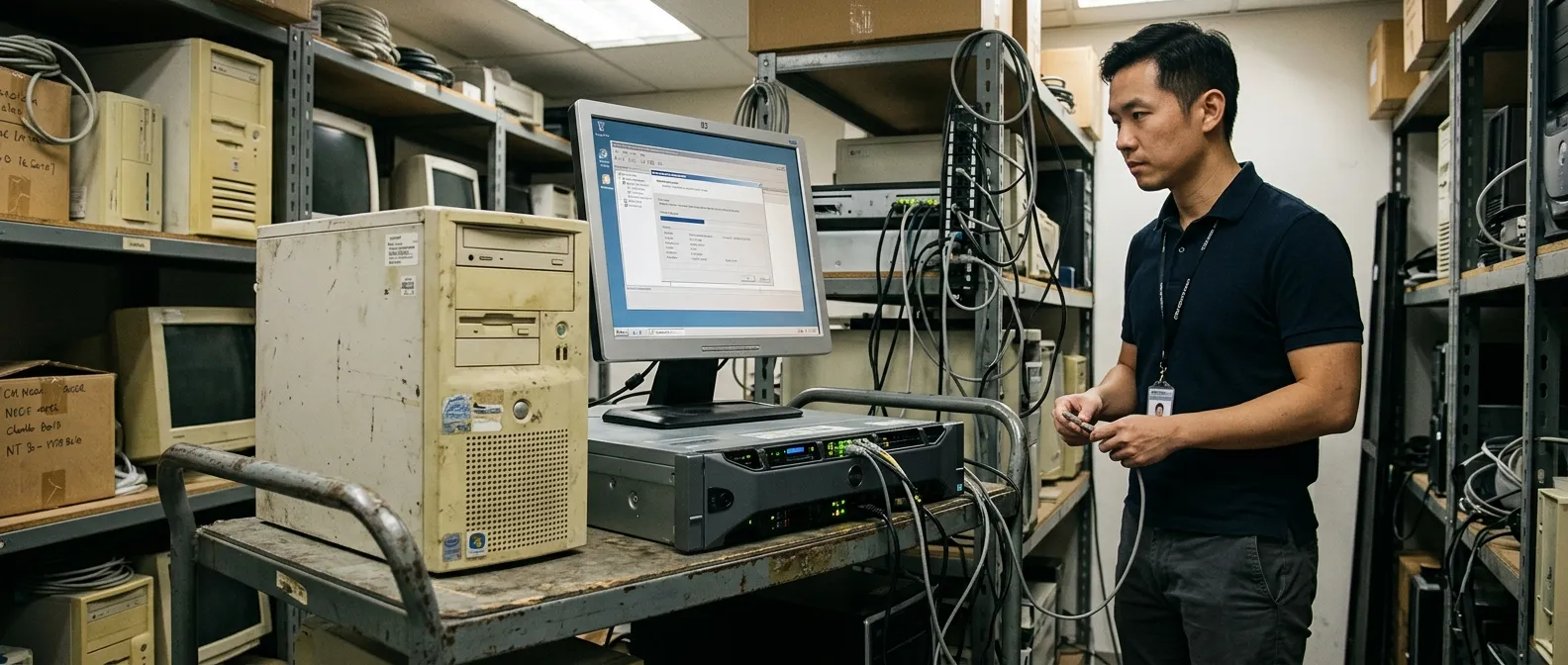
Virtualizing a Windows Server 2000 box: the boring rescue, twenty years on.
Lifting a semiconductor-testing app off a dying HP ProLiant onto VMware vSphere — a reminder that the boring rescue still happens, and what we'd do differently if we got the same call today.

Using Agents to Backfill NUnit Tests on a 2012 C# Monolith
Automating Let's Encrypt for IIS: most of the C# is no longer needed.
When a custom C# Windows Service for Let's Encrypt automation on IIS still earns its keep — and when a maintained tool is the right answer.
MCP Over STDIO: The Part Everyone Pretended Was Boring

If it doesn't have an eval harness, it's still a demo.
Five rules we use on every agentic build, drawn from a year of live client work, and the eval template we ship to every new engagement on day one.

GitHub Agentic Workflows: Markdown Is Not Governance

Inside the Finance Crew: drafting the close, signing the file.
Five narrow finance specialists running the close cycle, financial statements and statutory filings for a Singapore SME caseload — every figure tied to a source row, every filing signed by a registered chartered accountant. How we wired the agent crew under the licence.

Watching RDP for brute-force: when the homemade service still wins.
Most teams should turn RDP off entirely. For the ones that can't, a small Windows Service watching Event ID 4625 still has its place — here's the design and where it fits.

Assigning Dependabot To An Agent: Patch Faster, Review Harder

When Excel VBA is still the right answer.
Why an Excel VBA build for a sales-order management system was the right call when the client's IT compliance gate was 12 months — and why the pattern shows up more often in the AI era, not less.

GitHub Agent HQ Makes Agent Choice A Governance Problem

IMDA's Model Governance Framework for Agentic AI, read by builders.
Singapore published the world's first agentic-AI governance framework in January. Here's a builder's-eye reading: which controls are zero-cost if you architect for them, and which ones cost real engineering hours.

Cross-cloud business continuity for an ERP, and what we'd skip.
A BCM design for a Singapore real-estate agency's ERP — primary on AWS, secondary on Azure, JSON sync APIs, Windows resync service. What we'd cut, what we'd keep, and the SG listing-readiness angle.

Local LLMs for First-Pass Medical PII Redaction

Singpass Myinfo v5 and FAPI 2.0: An Agentic UI Upgrade

EC sales systems for property developers.
Building an Executive Condominium sales-day system for a Singapore property developer: SFTP to HDB, SHA-256 columns, real-time OTP generation, and the launch-day playbook.

The Right to be Forgotten in a Vector Database

Pinning financial forecasts on Ethereum: what we tried, and what we'd do now.
We used Ethereum mainnet to pin SHA-256 hashes of quarterly forecasting parameters as a tamper-evidence layer. The use case held; the chain choice didn't.

Decentralized voting on Ethereum: what we tried, archived honestly.
We built a decentralized voting system on Ethereum + .NET C#. It was a working proof-of-concept. It was not a good idea. Here is the honest framing we should have led with.

Condo management: the system we built, and the agent we'd add today.
Notes from running our Condo Management System in production: defect reports, voting, booking conflicts, and the one agent we'd add to the workflow today.

Smart Quotation, in the agent era.
Notes on plugging an agent into our Smart Quotation workflow: what changed, what we measured, and where the verification step matters.
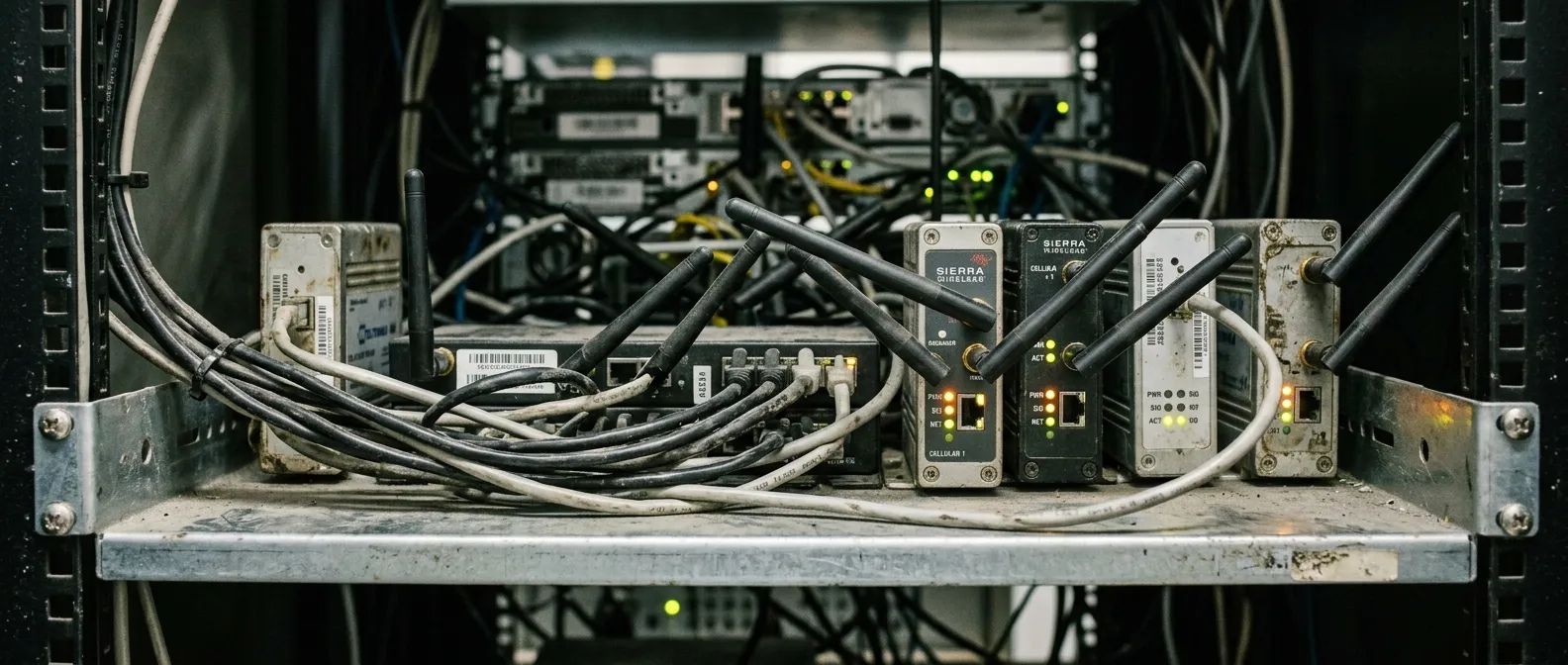
Our 3G/4G SMS gateway is still running. Here is what we'd change.
Our industrial-grade SMS gateway is still in production at SG enterprise clients. The hardware estate has aged. The cellular generation has not. Here's the honest update.