

When AI Coding Agents Become Line Items, Not Toys
By wGrow Project Team ·
We migrated an internal data parsing tool to a custom LangChain crew. The task: schema extraction from a messy legacy database dump inherited from a third-party healthcare integration. It was supposed to run overnight. Six hours later, we had a partial schema, a support ticket, and a $60 Anthropic API bill that accrued in two hours before anyone noticed the loop.
The failure was unremarkable. A single malformed regex caused a data validation step to reject its own output. The agent, attempting self-correction, retried the same call in a tight loop. No human approved iterations two through four hundred. The loop ran until someone checked Slack.
Humans type at roughly 40 words per minute. A well-provisioned agent with a 128k context window can process hundreds of thousands of tokens in the same period. That asymmetry is not a product roadmap problem — it is an architecture problem. Finance policies do not stop runtime bleeds. Vendor dashboards do not stop runtime bleeds. Cost control for AI agents is not an administrative task. It is an architectural requirement. You need per-task token budgets and mid-flight kill switches built directly into your queues, before the agent spawns.
The Latency Gap Is the Trap
- Cost Burn
- $60.00
- Time Elapsed
- 2 hrs
- Human Baseline
- ~0.5 t/s
- Agent Baseline
- 100k+ tokens per loop
Vendor billing dashboards are not real-time control surfaces. In our incident review, the spend view showed nothing unusual while the loop had already been running long enough to accumulate the charge — the alert arrived after the budget was gone. That lag is the trap.
Give an agent a 128k context window, let it hit a tight error loop, and it can burn through a task budget before a dashboard alert is actionable. By the time the alert fires, the damage is done. This is not a theoretical failure mode — it is exactly how our $60 incident played out.
“Unlimited” agent plans are under pressure for exactly this reason. SaaS pricing was built around human-speed interaction — it assumes seat count scales linearly with cost. Agents break that assumption completely. The marginal cost of an autonomous agent scales with loop iterations, not user seats. A single misconfigured crew can produce cost spikes that a hundred inattentive human users cannot.
Relying on a vendor dashboard for agent cost control is like driving a car where the speedometer updates every three miles. Technically accurate. Operationally useless.
The Awkward Spreadsheet That Replaced the Dashboard

We treat tokens like CPU cycles or database read/write units: budgeting happens before the agent spawns, not after.
We abandoned vendor dashboards for an internal queue-driven model governed by — yes — a spreadsheet. It is not elegant. It works.
The spreadsheet maps client deliverables to token allocations. Column headers: Deliverable_ID, Expected_LLM_Calls, Max_Tokens_Per_Call, Cost_Ceiling_USD, and Hard_Stop_Flag. That spreadsheet exports to a CSV, which populates the task queue. Every time a task is dequeued, the agent receives a strict token budget drawn from that row.
The reason this beats the dashboard is behavioural, not technical. The spreadsheet forces an engineer to assign a concrete financial value to an operation before writing the system prompt. If parsing a 200-page PDF cannot be completed within the Cost_Ceiling_USD, the architecture fails the review before any code is written. That forcing function matters more than any monitoring alert.
There is a real cost to this approach. Token budgets for novel task types are difficult to estimate accurately — underestimate and the agent trips the kill switch mid-task; overestimate and you lose the guardrail’s value. We calibrate through a small number of supervised dry runs before any new task type goes unsupervised in the queue. That is overhead. So is a $60 bill at 2 AM.
If you cannot budget a task before it starts, you do not understand the task well enough to automate it.
Building the Kill Switch
- Deliverable_ID
- — UUID mapped to client task
- Expected_LLM_Calls
- — Integer estimate for the loop
- Max_Tokens_Per_Call
- — Context size constraint
- Cost_Ceiling_USD
- — Decimal budget cap (hard stop)
- Hard_Stop_Flag
- — Boolean (Kill agent on breach)
Prompting an agent with “stop if it takes too long” does not work. The LLM has no persistent awareness of its own cumulative cost across calls. Hard enforcement has to live at the network and application layers — not inside a prompt.
Three patterns we use in production:
Pattern 1: Custom Callback Handlers. In our LangChain implementation, we override on_llm_start and on_llm_new_token. A running token tally lives in a Redis cache keyed by Task_ID. Every token increment updates the tally. The callback converts cumulative input and output tokens to an estimated spend using the model’s pricing rates, then compares that figure to Cost_Ceiling_USD on every tick.
Pattern 2: Streaming Token Interception. All API responses stream in chunks rather than waiting for a complete response. After every chunk, the system checks the Redis tally against the budget ceiling. If the limit is breached, the system throws a custom TokenLimitExceededError and severs the socket connection immediately. The agent does not receive a graceful completion. It gets a hard stop.
Pattern 3: API Gateway as Reverse Proxy. For broader crew deployments, all outbound LLM calls route through an internal reverse proxy built on LiteLLM with a custom Nginx Lua script. The proxy inspects the Task_ID header on every request, checks budget state in Redis, and returns a 429 marking a budget breach when the agent is over limit. Our client configuration explicitly excludes that response from retry policy, so the loop terminates at the network boundary rather than re-entering the agent runtime. Nothing inside the agent code needs to cooperate.
Run all three. In production, we treat them as layered defences, not competing options. The proxy adds latency on every call — under 10ms in our setup — which is an acceptable trade-off for enforcement that cannot be bypassed by application-layer bugs.
State Management When the Kill Switch Trips
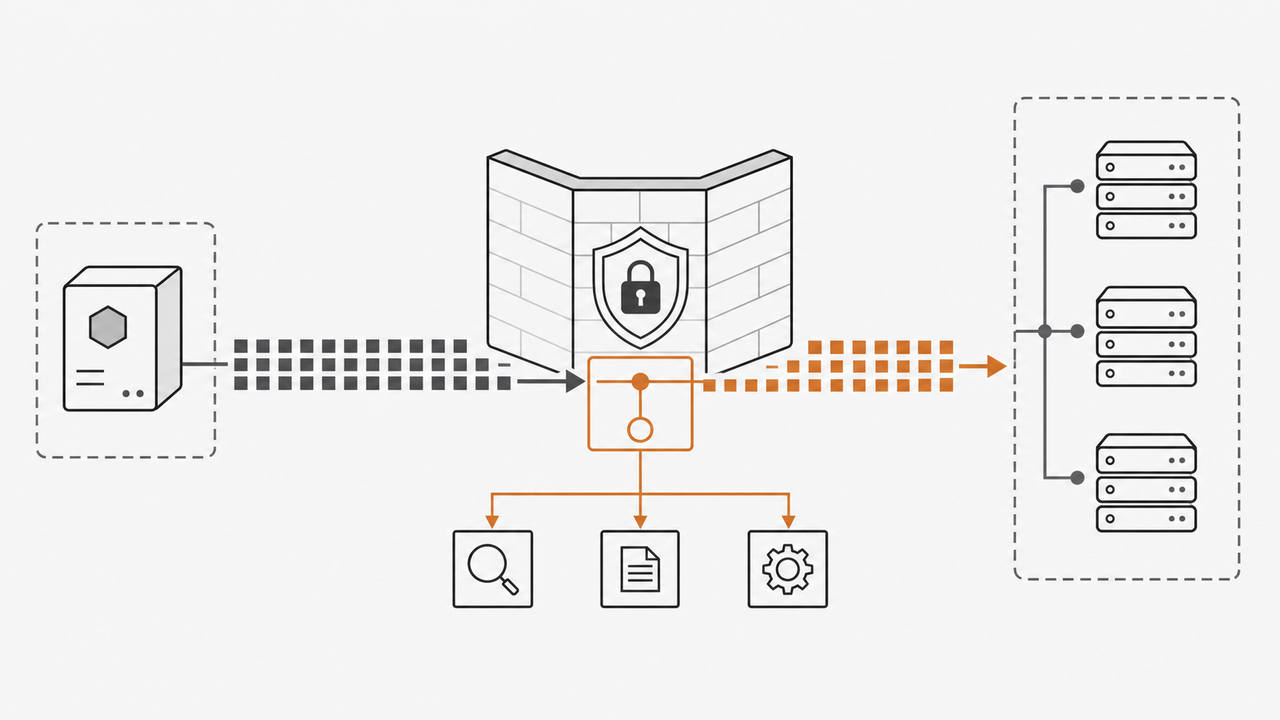
A kill switch is only useful if the system handles the shutdown correctly.
Concurrency semaphores. An agent crew tasked with research should not fan out to 50 parallel search queries without a thread cap. We set worker thread limits based on the allocated budget, not available compute. Uncapped parallelism multiplies token cost and compounds any underlying loop bug.
Hardcoded exit conditions. Every agentic loop — whether a LangGraph node or a custom retry block — includes an explicit max_iterations parameter set in code. Never rely on the LLM’s self-reflection to decide when a task is done. The model does not track its own cumulative token spend across calls. You do.
Failsafe states. When the kill switch trips or max_iterations is reached, the system must not blind-retry. Our architecture logs the partial execution state, dumps the context snapshot to S3, and routes an alert to the responsible engineer with the task ID, tokens consumed, and the last tool call that failed. The engineer decides whether to resume with a higher budget or redesign the subtask. That decision stays with a human.
Operational Baseline
At wGrow, no agent deploys to production without a predefined Cost_Ceiling_USD injected via the queue. Not a policy recommendation. Not a configuration option. A deployment gate.
Agents are headless microservices with no concept of fatigue or self-imposed limits. A malformed input can spin an agent indefinitely if the architecture permits it — and the architecture will permit it if you assume good behaviour and rely on vendor tooling designed for a fundamentally different usage pattern.
This approach carries its own maintenance burden. The spreadsheet needs updating as model pricing changes. The Redis tally adds state to manage. The proxy layer adds operational surface. None of that overhead disappears — it just becomes predictable, which is the point.
Your monthly API bill is not a reflection of your vendor choice. It is a reflection of your system design. Treat tokens as an infinite resource, and your agents will demonstrate otherwise at the speed of compute.
Budget the task before you spawn the agent. Build the kill switch before you need it. The spreadsheet is awkward. The $60 lesson is worse.