

GitHub Agent HQ Makes Agent Choice A Governance Problem
By wGrow Project Team ·
Treat GitHub Agent Selection Like Branch Protection
GitHub’s Agent HQ looks sharp in a developer demo: one repository, Claude for reasoning-heavy refactors, Codex for boilerplate generation, Copilot for inline autocomplete. The pitch is flexibility. Run it against an enterprise delivery checklist and it becomes a procurement audit in progress.
Model selection is no longer a local IDE preference. It is a server-side repository event — one that arrives with a vendor, a data destination, and an access log attached. If your compliance posture hasn’t caught up to that shift, you’ll find out under audit pressure.
The End of Developer Preference
When model choice lived in the developer’s IDE, the governance perimeter was informal. Code context could still leave the machine via vendor-hosted inference, and a developer’s personal API key created its own data-egress risk. But that risk wasn’t typically expressed as a repository-level access policy with central approval, blocking, and audit controls. It sat with the individual developer, not the organisation.
GitHub’s multi-agent support changes that surface area entirely. A model is now selected inside a repository workflow. That workflow runs against your codebase. The model receives context from your files, your pull request diff, your issue history — scoped to whatever repository, pull-request, and issue permissions the workflow grants. If agent invocations are captured as repository audit events — coverage depends on your GitHub plan and audit-log configuration — model selection becomes an access-control decision that procurement can interrogate, not a developer preference. Local preference has become organisational access control, and most teams have not written a policy to match.
Letting developers pick whichever agent produces the best output sounds pragmatic — and for low-sensitivity internal repositories, it often is. The problem surfaces the moment that flexibility crosses into repositories with a defined data classification tier. Procurement will ask which vendors had read-access to the repository containing your core product logic. “The developer preferred Claude for this refactor” is not a vendor approval. It is a liability disclosure.
The Vendor Tier Audit Failure

We encountered this directly during a compliance rollout for an MNC client in 2025. The repository was configured to allow multiple agents. We had set up Claude for the architectural review layer — the reasoning depth was materially better for the domain. Procurement flagged it within a week of the first sprint review.
The issue was not output quality. The issue was that the approved vendor tier for that data classification only permitted Azure OpenAI endpoints. Anthropic had not been through the client’s third-party vendor assessment. Code logic had been sent to an unapproved vendor. We halted delivery, removed the multi-agent configuration, and hardcoded the Azure OpenAI constraint at the workflow level.
If a model is not cleared for a specific data classification tier, it cannot have repository access, regardless of output quality. Developer preference is not a procurement waiver.
Chain of Custody in Government Delivery
A related problem surfaced during a government tender delivery. The client required deterministic mapping of every automated pull request review — each check had to follow an exact checklist, applied consistently, with a traceable audit trail back to the specific ruleset used.
Mixing agents breaks that chain of custody when agent selection is unpinned or when run metadata cannot prove which exact model version, prompt, ruleset, tool permissions, retrieval scope, and decoding settings each run used — and most multi-agent configurations capture none of those. When the reviewing agent varies based on who opened the PR or queue availability, you lose the deterministic guarantee.
For that project, we had to prove that every automated check used a specific, versioned ruleset applied by a single defined agent with no variance based on developer context. A unified agent policy — one pinned model version, one versioned prompt and ruleset, fixed tool permissions, fixed retrieval scope, enforced at the repository level — was the architecture that satisfied the requirement. Define any one of those variables loosely and you reintroduce review variance. In a regulated delivery context, untracked review variance is a chain-of-custody failure.
Why Pull Request Logs Fail Procurement Checks
| 1 | name: Strict Agent Policy | |
| 2 | approvals: | |
| 3 | require_agent_review: true | |
| 4 | allowed_models: | |
| 5 | - azure-openai-gpt4 | ← ① |
| 6 | - custom-internal-codex | |
| 7 | blocked_models: | |
| 8 | - '*' | ← ② |
| 9 |
- ① Only approved enterprise endpoints allowed to read repo.
- ② Hard systemic block for all other unvetted providers.
GitHub’s per-PR agent logs are genuinely useful for developers: what the agent generated, what changes it proposed, which rules it applied. For a developer debugging an unexpected suggestion, that is exactly what you need.
For a compliance audit, those logs answer the wrong question. Auditors are not asking what the agent generated. They are asking what the agent had permission to read — and whether that permission was technically enforced or simply a matter of developer discretion.
Procurement will ask why a specific model saw a specific repository at a specific point in time. They will ask whether that model was on the approved vendor list for that data tier. They will ask whether a technical control existed to prevent an unapproved model from accessing the repository, or whether the only control was developer judgment. “The developer selected it” registers as a policy gap, not an explanation.
You need a systemic block. The system must prove that an unapproved model was technically prevented from accessing the repository. A log written after the fact does not satisfy that requirement.
Moving Model Policy to Repository Configuration
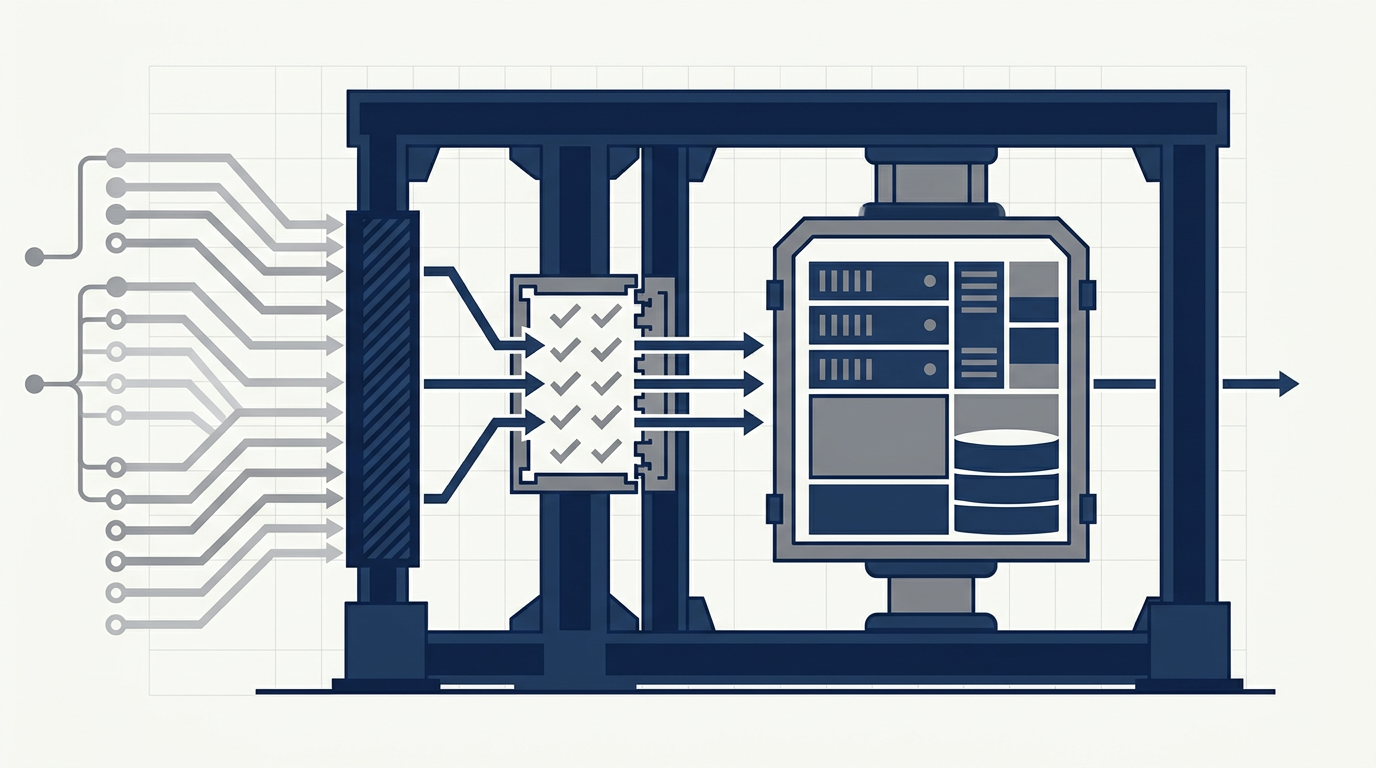
The fix is architectural, not procedural. Model selection policies belong in your repository configuration, directly beside your branch protection rules. Define the approved model — or an approved list — in the configuration file. Enforce it at the workflow level. Treat any attempt to invoke an out-of-policy model the same way you treat an unauthorised push to a protected branch: block it, log it, alert.
The pull request review layer is your final governance checkpoint before merge. It must apply the same ruleset regardless of which developer opened the PR, which agent they preferred, or which model was available in the queue.
Stop treating AI agents as coding assistants with helpful suggestions. Treat them as third-party vendors with read-access to your intellectual property. Your vendor management framework, data classification policy, and access control architecture should apply to them on the same terms as any other vendor with API access to production systems.
GitHub Agent HQ is a useful feature for teams that have already done this governance work. For teams that haven’t, it extends the attack surface on an existing compliance gap. Write the policy before procurement flags the finding.