
Implemented AI-native processes & workflows
Aright Tech: AI-native workflows for brand, content and commerce
Aright connects product knowledge, research, content and creative production with the websites and channels customers use. wGrow’s implementation makes AI part of that operating work, supported by a shared platform and people responsible for review and delivery.
Aright Tech / Research into a customer journey
Give every output somewhere useful to go.
Research, editorial and creative production connect product knowledge to a commercial destination.
- 01
Business information
Know the product
A customer question, product facts, market context and brand direction.
- Product knowledge
- Research brief
- 02
Specialist work
Develop the material
Editorial work and creative production turn context into candidate content.
- Editorial stages
- Creative workflow
- 03
Human decision
Review for the purpose
Editors and creative reviewers check evidence, product detail and expression.
- Editorial judgment
- Art direction
- 04
Practical destination
Connect to the journey
Approved explanations and materials support portals, listings and campaigns.
- Portals + libraries
- Commerce content
Product context carries forward. The people responsible for delivery retain the important judgments.
An operating business, connected through software
Aright Tech connects brand building, product explanations, dedicated portals, customer acquisition and commerce operations. Its Indonesia work spans eight consumer brands: Hanafashion, Bigins.ID, Eraya, Eclat Candles, Bellavee, PlayPack, Parenté and Babylief. The operating work includes marketplace presentation, social profiles, product content, campaigns and live demonstrations.
wGrow has implemented AI-native processes and workflows across Aright’s business. The engineering challenge is to connect repeated tasks with their business context: which shop, which product, which customer question and which destination. ArightAI provides a shared platform for research and creative work; Aright’s portal and commerce cases show where product explanations and approved materials belong.
Explore Aright’s operating work and Indonesia shop cases.
From research to listing and campaign materials
ArightAI’s public platform description follows three stages: research, create and campaign. Research covers product opportunities, keywords, trends, competitors and sentiment. Creation turns product inputs into listing copy and visual assets. Campaign work prepares posts, short-video workflows and shop-level campaign bundles.
The platform console organises modules around shops and products alongside imagery, infographics, banners and advertising creative. That structure gives product information a continuing place in the work. A product title, visual and campaign message need to refer to the same item, even when their formats differ.
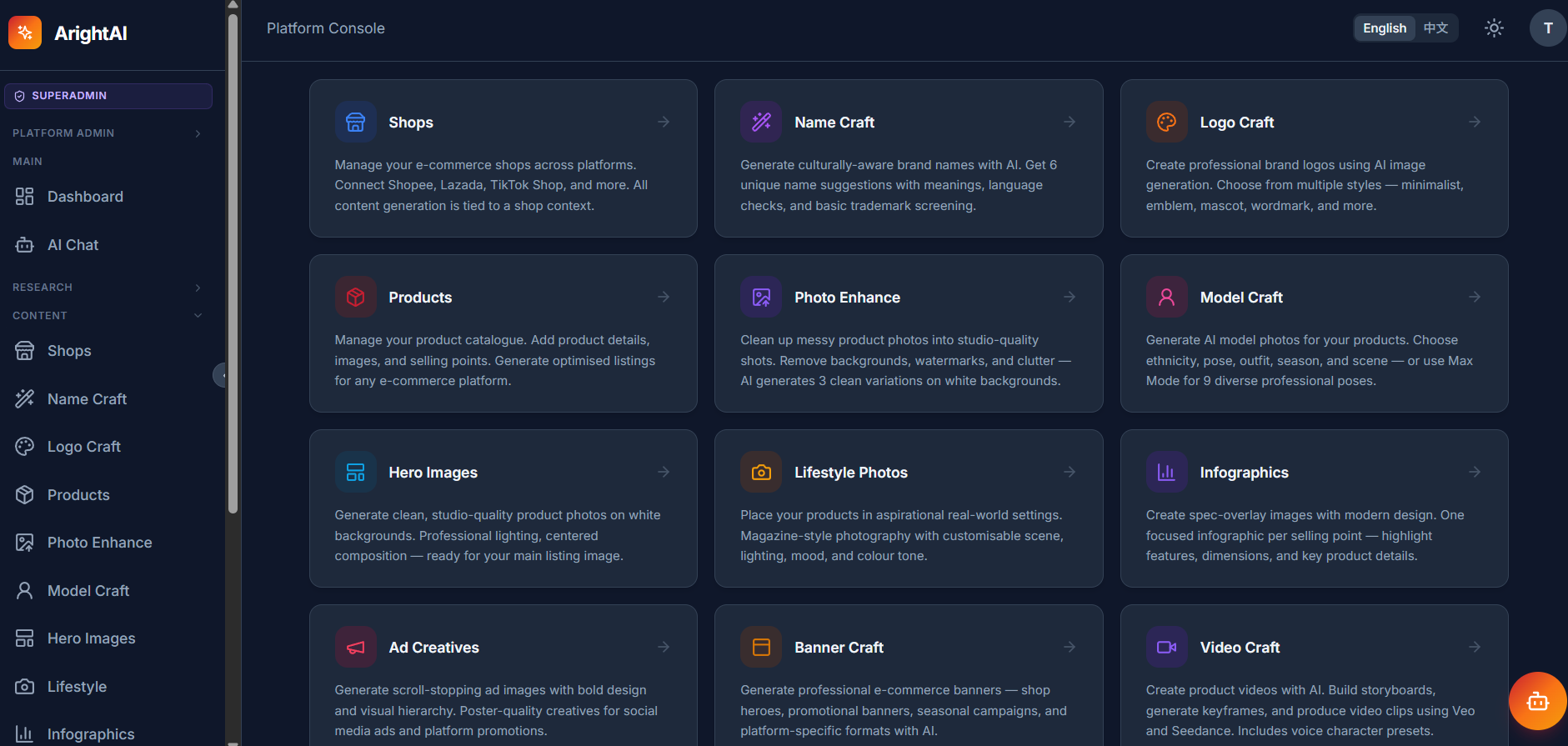
The public offer names Shopee, TikTok Shop, Tokopedia, Lazada, Amazon and Shopify as content targets. Preparing material for a channel does not establish direct publishing integration. The platform’s marketing page makes that distinction explicit; channel execution remains subject to the supported integration and operating arrangement.
See ArightAI’s research-to-campaign offer.
Research and creative work have review points
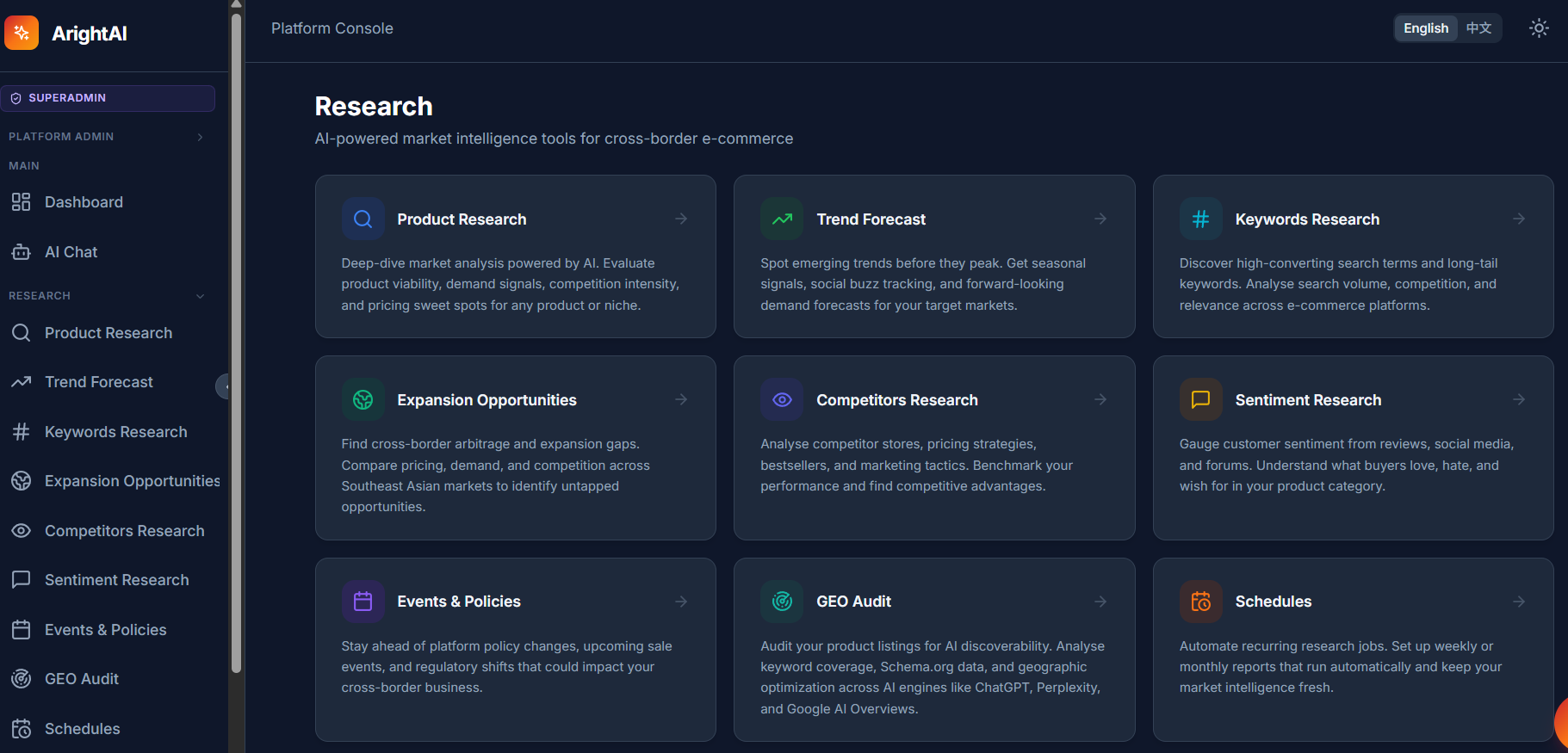
The research workspace brings market-intelligence tasks into the same platform context as production. Research can inform an angle or brief, but a result still needs to be assessed for relevance to the product and market.
The documented Image Crew process connects analysis, creative briefing, generation, grading and human art-direction approval. Product details and references inform a direction; generated alternatives are reviewed before selection. People remain responsible for accurate product representation and suitable brand expression.
Explore the Image Crew workflow.
Editorial work becomes a useful customer destination
Aright’s dedicated-portal work connects research and content to a commercial journey. Its published process describes agent crews supporting topic development, research, drafting and structured review. Editorial review checks arguments, sources, product facts and brand voice before publication.
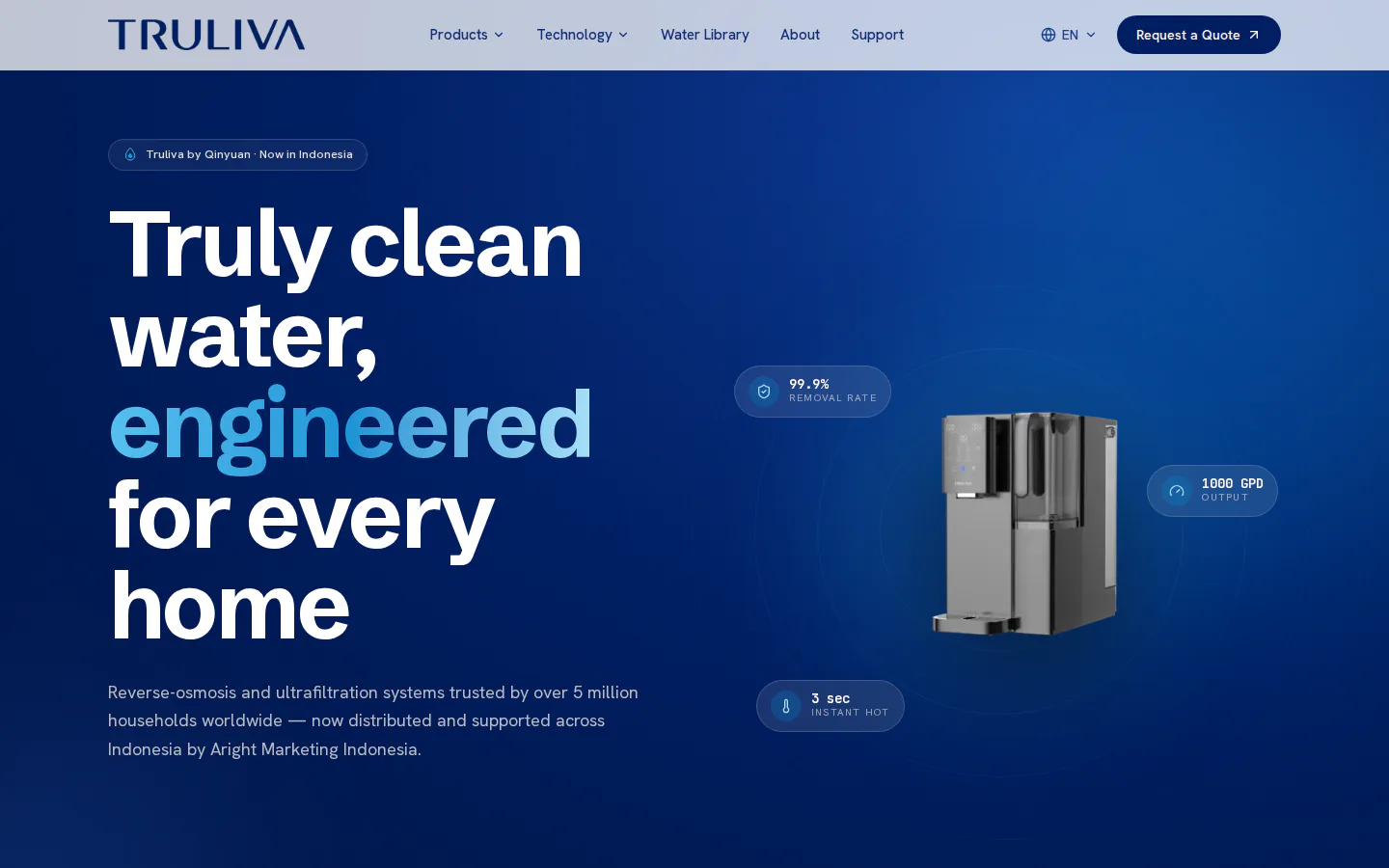
Truliva Indonesia makes that purpose concrete. Its portal organises water-treatment products by application, explains specifications and installation considerations, and connects product information to quotation, dealer and support routes. The Water Library addresses selection, local water concerns and ownership questions, with related reading and product links.
Reel & Loom demonstrates a different buying context: silk provenance, product configuration, comparisons and care. Its journal develops those questions while consumer registration and partner routes give different visitors a relevant next step. The published case describes preparation ahead of the first collection launch; it is not evidence of completed consumer sales.
Explore Truliva Indonesia, Reel & Loom and the portal approach.
Delivery continues across channels
Aright’s shop work carries product context into storefronts, social content, advertising and live presentation. Clothing needs fit and styling; bags need carrying and interior detail; strollers need configuration demonstrations. Those differences determine what the material must explain.
Its published operating process starts with a product and customer question, prepares the shop and creative, coordinates the relevant channels, then reviews available feedback. Customer questions, channel reports and shop information guide subsequent content and presentation. This is a connected operating cycle, rather than a claim that AI autonomously publishes or manages every channel.
A related business with clear attribution
Aright Tech is a related business with shared founder involvement. Its public team page identifies Timothy Mo’s technology and delivery role alongside John Wan’s brand, content and business-development role. ArightAI is platform work in this operating context; the portal projects are Aright delivery examples, not separate wGrow FDE client claims.
Aright’s history dates from 2019. wGrow’s Since 2008 refers to its own engineering history. Together, the examples show a practical FDE pattern: learn the operating context, build software around repeated work, connect outputs to their destination and keep important judgments with people.
Meet the Aright team or explore AI Forward Deployed Engineering with wGrow.