

Enterprise Deep Research Needs Citation Triage Screens
By wGrow Project Team ·
In our WaterDoctor pipeline, long-form synthesis is no longer the hard part; provenance review is. Almost nobody in a corporate compliance department cares how fast the draft comes together. That capability stopped being interesting once most vendors in the space could do it too. What compliance cares about is one question: where did this specific sentence come from, and can I verify it in under ten seconds? Get that answer wrong and the deployment gets blocked — the fifty pages of nicely formatted prose just sit on a shared drive, unread.
The PDF Commodity Problem
Product managers building retrieval-augmented generation systems spend a disproportionate amount of time on the final artifact — the export template, the executive summary, the citation footer styling. That’s effort spent on the wrong layer. The report itself is a commodity now. Most modern models with tool access and a large enough context window can produce a competent-looking synthesis document today. That’s not a moat. It’s table stakes.
We learned this the hard way running WaterDoctor’s article generation crews — a multi-agent pipeline that researches, drafts, and fact-checks technical water-treatment content before it reaches a human editor. Early versions were optimized almost entirely for output quality: better prose, tighter structure, more diverse sourcing in the bibliography. The reports read well. They also got rejected constantly, because “reads well” and “is defensible” turn out to be different properties — and only one of them survives a compliance review.
The real product surface, we found, isn’t the document. It’s the middleware screen where a human decides which retrieved claims are allowed to survive into it. We call this the citation triage screen, and it’s where the engineering effort now goes.
Claim-Level Validation

Our first version of that screen let reviewers reject whole paragraphs. It failed within a week of internal use — not because reviewers disliked the paragraphs, but because a paragraph is usually four or five sentences, and typically only one of them is shaky. A binary approve/reject on the whole block meant reviewers either rubber-stamped a paragraph with one bad sentence buried inside it, or rejected an entire section over a single unverifiable clause, sending the agent back to regenerate perfectly good prose just to fix one bad line.
So we rebuilt the interface around individual claims instead. Every factual statement the WaterDoctor research crew generates gets tagged as a discrete claim object with exactly one attached source. The triage screen renders these as a list — claim text on the left, citation on the right, approve/reject toggle in between — and a reviewer works down it claim by claim. No partial credit, no bundling. You approve a claim. Never a paragraph.
When a claim gets rejected, the compilation step doesn’t hand a human a rewrite job — the agent drops the claim and recompiles the surrounding text to read naturally without it. Sounds like a small mechanical difference from paragraph-level review. It wasn’t. Reviewers started flagging individual dubious sentences far more readily than they’d ever flag an entire section, and the review pass itself got easier to get through, because the interface had already done the decomposition work reviewers used to do in their heads before judging a paragraph. One trade-off worth naming: recompiled paragraphs occasionally lose a transition or a bit of rhythm the original had, so a light copy-edit pass still runs after compilation. The interface removes the rewrite burden. Not all of it.
Managing Citation Lifecycle States
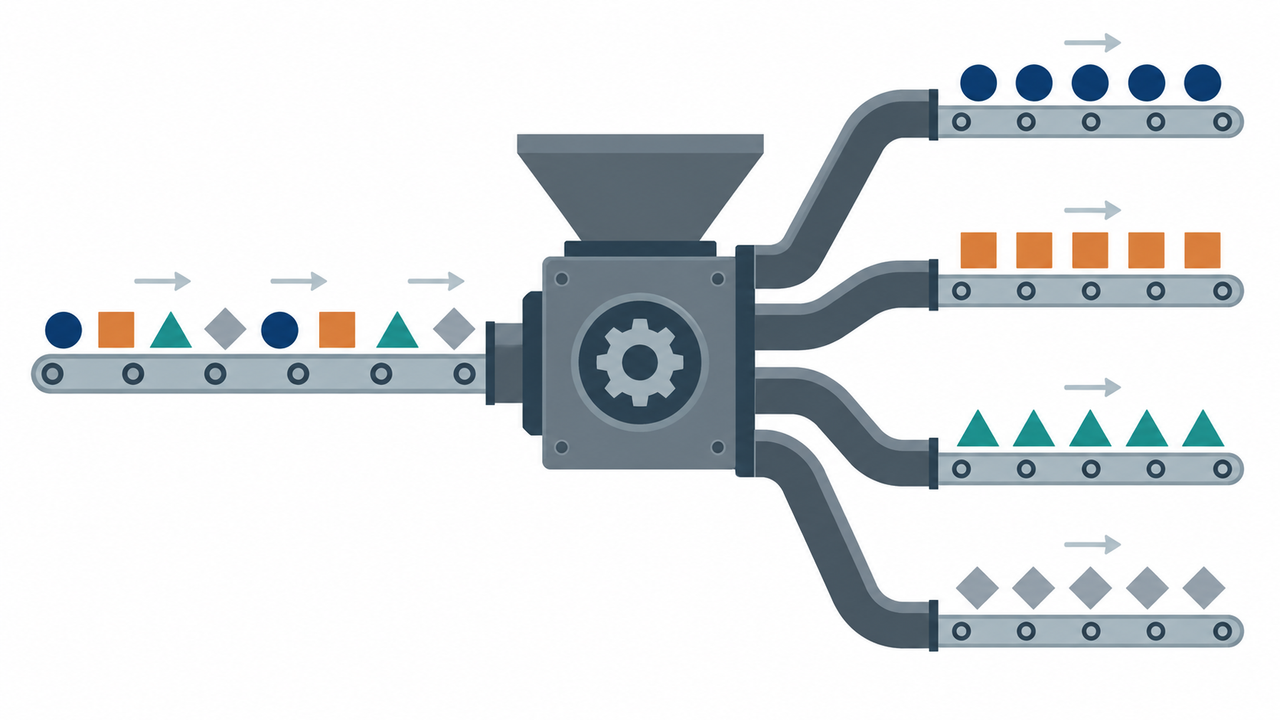
The second thing we got wrong early on was treating a citation as a static pointer — a URL or document title attached to a claim, present or absent. That model breaks in production, because a citation’s usefulness changes over time and across contexts. A source isn’t just cited or uncited; it has a state, and that state needs to be visible on the triage screen before the claim is allowed to compile.
We track four: accepted, stale, duplicate, and inaccessible.
Stale sources are the most common failure mode in a technical domain like water treatment, where specs and standards get revised on a regular cycle. The vector database in the WaterDoctor pipeline will happily surface a treatment-process spec sheet from years back because it’s the best semantic match for the query — with zero awareness that a newer version exists. The triage screen flags source age against the claim’s subject matter before a reviewer ever sees it. A claim about a current regulatory threshold citing a document that predates the last revision gets an automatic staleness flag, not a silent pass.
Duplicate sources show up constantly because research agents don’t know which of two documents is upstream of the other. A secondary write-up and the primary release it’s summarizing frequently retrieve as separate hits for the same underlying fact, and the pipeline ends up generating two separate claim objects — same fact, two different citations. Left uncaught, the compiled report cites both, which looks like independent corroboration when it’s really one source cited twice with extra steps. The triage screen groups these matched-fact claims together and asks the reviewer to pick the stronger citation — generally the primary source over the secondary — then drops the redundant one.
Inaccessible sources are a link-rot problem specific to enterprise and intranet content: internal wikis get restructured, document IDs change, and a citation that resolved fine during retrieval returns a 404 by the time a human reviews it. We run a live resolution check at the validation gate, not just at retrieval time, because in an async pipeline those two moments can be hours apart. A citation that fails resolution doesn’t get quietly dropped — the claim it supports gets flagged for manual verification instead, since a 404 doesn’t tell you the underlying fact is wrong. It just tells you the fact can no longer be checked the easy way.
Tracking four states instead of a boolean adds real engineering overhead — more schema, more UI states, more edge cases to test. But the alternative is a citation field that looks trustworthy and isn’t. Four states, one screen: no claim compiles without landing in “accepted.”
The Private Data Leakage Trap
The harder version of this problem showed up in an SME knowledge-base deployment, where the research agent had to synthesize internal operational data — process logs, internal memos, incident reports — alongside public web sources in the same report. Mixing those two source classes creates a permissions problem that a public-web-only research agent never has to solve.
The tension here is structural, not incidental. You need to cite the internal document to make the claim credible and auditable. You cannot let an unauthorized reader see the raw text of that document just because they happen to be reading a report that references it. Distribute a report to a wider audience than the source document’s own access list, and it leaks that source’s content — unless something in the pipeline actively stops it.
We built permission-awareness directly into the triage screen and, more importantly, into the compiled output itself. If the reader viewing a claim lacks read access to the document it cites, the raw extract gets masked. What renders instead is the document title and compliance metadata — classification level, owning department, last-review date — enough for the reader to know the claim is grounded in something real and auditable, without exposing what that something actually says. The research agent still synthesizes using the full text, but the claim it produces is a permitted, high-level statement, not a paraphrase close enough to reconstruct the source. The triage UI enforces the same restriction on the reviewer side: a reviewer without clearance for a document approves or rejects the claim on the strength of the metadata and the agent’s synthesis, not by reading the restricted source directly.
That’s an imperfect substitute for reading the source. A reviewer working from metadata alone has to trust the synthesis more than they would with the original text in front of them — which is exactly why permission-restricted claims get routed for a second pass by someone who does have clearance.
Tedious to build. Easy to skip. Also the difference between a deployable internal research tool and one that legal shuts down after the first cross-department access review.
Source Coverage Gates as Standard Middleware

None of this belongs in a footnote appended after the prompt chain finishes. Citation state — accepted, stale, duplicate, inaccessible — and citation permission scope need to be first-class fields on every claim object from the moment it’s generated. Not metadata bolted on for display purposes.
The practical implication for anyone architecting a RAG system for enterprise use: build a source coverage gate as a hard compile-time check, not a soft warning. If a claim’s citation hasn’t reached “accepted” state and cleared the permission check, the report does not compile. Not “compiles with a warning banner.” Does not compile.
This slows things down. A report with a handful of stubborn stale citations can sit in review longer than a looser system would allow, and that’s a real cost in a workflow where speed is otherwise the whole pitch. But it’s the trade a compliance-grade tool has to make. The constraint is what makes the eventual PDF trustworthy enough for a compliance team to actually sign off on — and what turns a demo-quality research agent into something you can put in front of a client who’s going to ask hard questions about provenance.
The vendors likely to win this category over the next few years won’t be the ones with the best-formatted output. They’ll be the ones whose triage screen a compliance officer can audit in five minutes — and trust for the next five years.